Currently Empty: $0.00

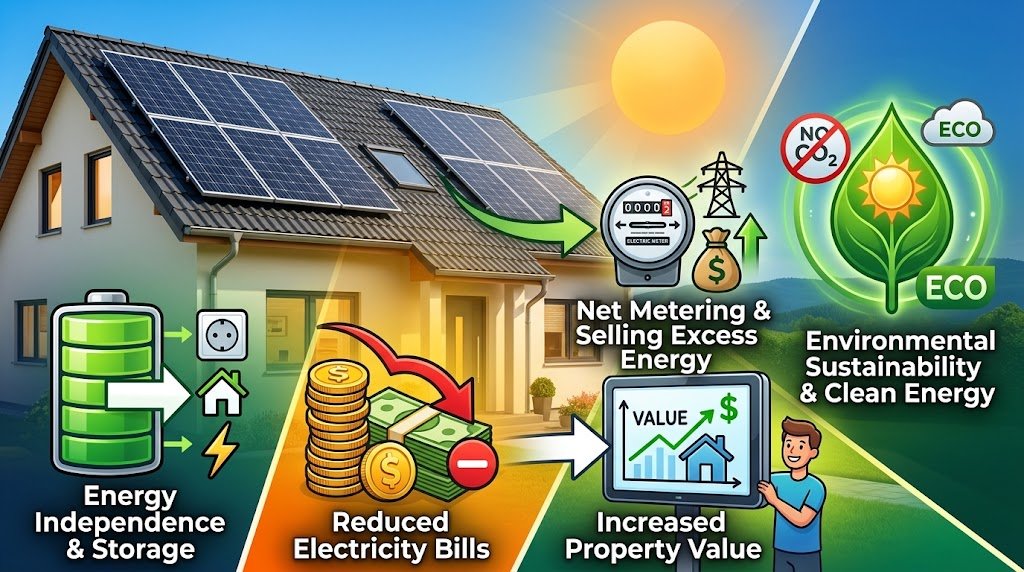
What are the main benefits of installing solar panels for home energy?
Solar energy has moved from a niche, expensive technology to a mainstream option that millions of homeowners now consider seriously when planning long-term home improvements. As electricity costs continue to rise and climate awareness grows, more households are looking into solar panels not just as an environmentally friendly choice, but as a genuinely smart financial decision. What was once seen as an investment reserved for wealthy early adopters has become a practical, increasingly affordable option for ordinary families who simply want more control over their monthly bills and where their energy comes from.
Understanding the real benefits of installing solar panels for home energy can help homeowners decide whether this investment makes sense for their specific situation, budget, and long-term plans. It’s not a decision that should be made purely on emotion or a slick sales pitch. It deserves a clear-eyed look at the financial upside, the practical tradeoffs, and the everyday realities of owning a solar system. This article walks through every major angle, from savings and independence to installation, financing, maintenance, and the questions homeowners tend to have before signing a contract.
How Home Solar Panel Systems Actually Work
Before diving into the benefits, it helps to understand the basic mechanics of how a residential solar system generates usable electricity, since this context makes the rest of the discussion easier to follow. Solar panels are made up of individual photovoltaic cells, usually built from silicon, that convert sunlight into direct current, or DC, electricity when photons from sunlight strike the cell’s surface. Because most household appliances and the electrical grid itself run on alternating current, or AC, a solar system includes an inverter that converts the DC electricity generated by the panels into usable AC electricity for the home.
Most residential systems are what’s called “grid-tied,” meaning they remain connected to the local utility grid even after installation. During the day, when panels are generating more electricity than the home is using, the excess power typically flows back into the grid, and depending on local policy, the homeowner may receive credit for that excess through a program known as net metering. At night or during periods of low sunlight, the home simply draws power from the grid as it normally would, meaning solar homeowners are rarely left without electricity, even without a battery backup system.
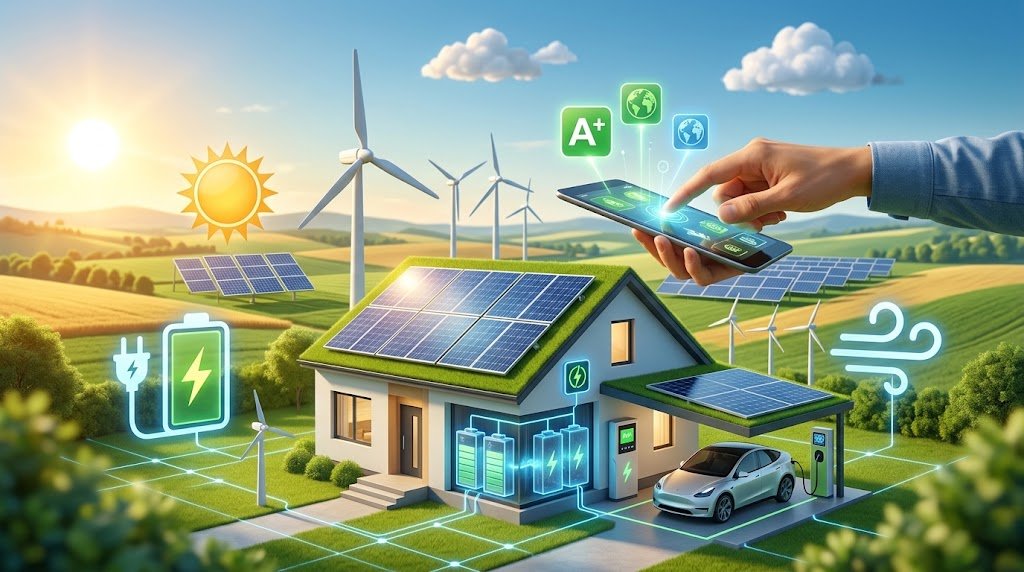
Some homeowners choose to add battery storage to their system, which stores excess solar energy generated during the day for use at night or during an outage, reducing reliance on the grid even further. Understanding this basic setup makes it much easier to evaluate the benefits discussed throughout the rest of this article, since almost every advantage traces back to how efficiently a system can generate, use, and sometimes store its own electricity.
Key Points on How Solar Systems Work:
- Photovoltaic cells convert sunlight directly into DC electricity
- An inverter converts DC electricity into usable AC power for the home
- Most systems remain grid-tied, allowing seamless backup from the utility
- Net metering allows excess daytime generation to offset nighttime usage
- Battery storage is optional but increases independence from the grid
[Image Placeholder: Diagram showing how solar panels convert sunlight into home electricity]
Significant Long-Term Savings on Electricity Bills
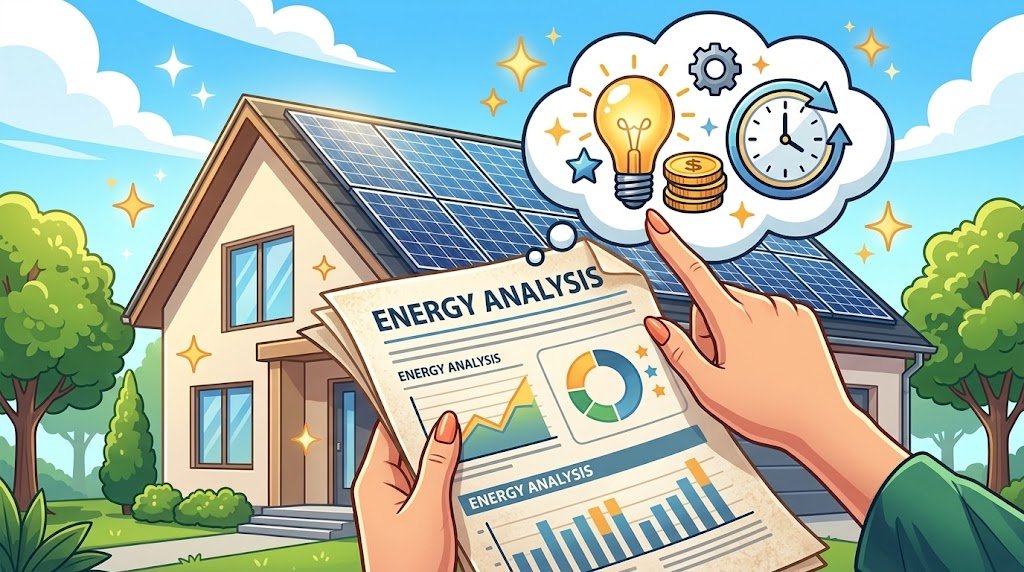
The most commonly cited benefit of home solar panels is the potential for significant long-term savings on electricity costs. Once a solar system is installed and paid for, either upfront or through financing, the energy it generates is essentially free, aside from routine maintenance. For many homeowners, this means a noticeable reduction in monthly electricity bills almost immediately after installation, with the potential for the system to pay for itself entirely within a number of years, depending on system size, local electricity rates, and available incentives.
Over the typical 25 to 30 year lifespan of a solar panel system, the cumulative savings can be substantial, especially in regions where electricity rates are high or expected to keep rising. While the exact savings depend heavily on factors like local sunlight availability, roof orientation, and household energy usage, the general trend for most homeowners is a meaningful reduction in what they would have otherwise paid to a utility company over the life of the system.
It’s worth understanding that savings aren’t always immediate or dramatic in the very first month, particularly for homeowners who finance their system through a loan, since loan payments can offset some of the early savings. However, as the system continues generating free electricity year after year while loan payments eventually end, the financial benefit compounds significantly over time. Homeowners who pay for their system in cash typically see the fastest and most direct impact on their monthly bills from day one.
Key Points on Long-Term Savings:
- Solar energy generation becomes essentially free after the system is installed
- Many homeowners see reduced electricity bills shortly after installation
- Systems typically pay for themselves over a period of years, depending on usage and rates
- Long-term savings can be substantial over a system’s 25 to 30 year lifespan
- Cash purchases tend to deliver the fastest visible reduction in monthly bills
[Image Placeholder: Homeowner reviewing a lower electricity bill after solar installation]
Protection Against Rising Utility Rates
Electricity rates have historically trended upward over time, and relying entirely on the grid means homeowners are subject to these increases indefinitely, with little ability to predict or control how much their bills will rise year after year. Solar panels offer a degree of protection against this uncertainty by allowing homeowners to generate a significant portion, or in some cases nearly all, of their own electricity needs, reducing dependence on a utility company whose rates they have no control over.
This benefit becomes increasingly valuable the longer a homeowner stays in their property, since the savings compared to rising grid electricity costs tend to grow larger each year. For homeowners planning to stay in their home long-term, this predictability and protection from rate increases is often one of the most appealing aspects of going solar. Instead of watching utility bills creep upward every year with no way to respond, solar homeowners essentially lock in a large portion of their energy costs at the time of installation.
This kind of rate protection is particularly valuable in regions where utility companies have a history of frequent rate hikes, seasonal pricing spikes, or time-of-use billing structures that charge more during peak demand hours. Solar panels help insulate a household from these fluctuations, offering a level of budgeting predictability that grid-only households simply don’t have access to.
Key Points on Rate Protection:
- Solar panels reduce dependence on utility companies and their pricing
- Homeowners gain more predictable, stable energy costs over time
- The value of this protection increases the longer a household stays in the home
- Reduces vulnerability to seasonal or regional utility rate spikes
- Particularly valuable in areas with time-of-use or peak-demand billing structures
[Image Placeholder: Graph showing rising utility rates compared to stable solar costs]
Increased Home Property Value
Homes equipped with solar panel systems, particularly those that are owned outright rather than leased, often see an increase in property value compared to similar homes without solar installations. Buyers increasingly view solar panels as a desirable feature, both for the potential energy savings and for the environmental appeal, which can make a solar-equipped home more attractive in a competitive real estate market. In many housing markets, listings that mention solar panels tend to generate more interest and can sometimes sell faster than comparable homes without them.
It’s worth noting that the value increase can depend on factors like whether the system is owned or leased, the age and condition of the panels, and regional buyer preferences. Homes with owned, well-maintained systems tend to see the most consistent value benefits, while leased systems can sometimes complicate a sale, since the lease terms need to be transferred to the new owner, and some buyers are hesitant to take on an existing lease agreement they didn’t negotiate themselves.
Appraisers in many regions have also become more familiar with how to properly value solar installations, which has made it easier for homeowners to see this benefit reflected accurately during a home sale or refinance. Keeping documentation of system costs, energy production history, and any warranties in place can help support a stronger valuation when the time comes to sell.
Key Points on Property Value:
- Owned solar systems often increase a home’s resale value
- Buyers increasingly view solar panels as a desirable, modern feature
- Leased systems can complicate the sale process due to lease transfer requirements
- Well-maintained, owned systems tend to offer the most consistent value benefits
- Keeping documentation of costs and production history supports a stronger appraisal
[Image Placeholder: “For Sale” sign in front of a home with solar panels installed]
Reduced Environmental Impact
Beyond the financial benefits, installing solar panels significantly reduces a household’s reliance on fossil fuel-generated electricity, which lowers the overall carbon footprint associated with daily energy use. Traditional electricity generation from coal or natural gas produces greenhouse gas emissions and other pollutants, while solar energy generates electricity without ongoing emissions once the system is in place. Over the lifetime of a typical residential system, the cumulative reduction in emissions can be substantial, often equivalent to removing a car from the road for a meaningful number of years.
For environmentally conscious homeowners, this reduction in environmental impact is often just as important as the financial savings. Many households view solar panels as a tangible way to contribute to broader environmental goals directly from their own property, without needing to rely solely on large-scale policy changes or waiting for utility companies to shift toward renewable sources on their own timeline.
Solar energy also reduces strain on local water resources compared to some traditional forms of electricity generation, since many conventional power plants require significant water for cooling processes. While this benefit is less visible day to day than a lower electricity bill, it contributes to the broader case for solar as a more sustainable long-term energy source for both individual households and the wider community.
Key Points on Environmental Benefits:
- Solar energy generates electricity without ongoing greenhouse gas emissions
- Reduces household reliance on fossil fuel-based power generation
- Offers a direct, personal way to reduce environmental impact
- Contributes to broader community and regional clean energy goals
- Reduces strain on water resources compared to some traditional power generation methods
[Image Placeholder: Close-up of solar panels with a clear blue sky in the background]
Energy Independence and Backup Power Options
Solar panel systems, especially when paired with battery storage, offer homeowners a degree of energy independence that traditional grid-only setups simply can’t provide. During power outages, homes with solar and battery storage can continue running essential appliances and systems, which can be particularly valuable in areas prone to severe weather, wildfires, or unreliable grid infrastructure. For families with medical equipment that requires a constant power supply, or households in regions where outages are common, this backup capability can be one of the most meaningful practical benefits of going solar.
Even without battery storage, many grid-tied solar systems allow homeowners to draw on stored credits from excess energy generated during sunny periods, a system commonly known as net metering, which helps offset costs during periods of lower solar generation, such as cloudy days or winter months. This system effectively uses the grid itself as a kind of storage bank, crediting homeowners for what they contribute and drawing down those credits when their own production dips.
It’s important to understand that a standard grid-tied solar system without battery storage will typically shut down automatically during a grid outage, for safety reasons related to utility workers repairing power lines. Homeowners who specifically want backup power during outages need to invest in battery storage or a hybrid inverter system designed to island the home from the grid safely during an outage.
Key Points on Energy Independence:
- Battery storage paired with solar panels can provide backup power during outages
- Reduces vulnerability to grid failures, particularly in severe weather regions
- Net metering allows excess solar energy to offset costs during lower-generation periods
- Standard grid-tied systems without batteries still shut off during outages for safety
- Battery or hybrid systems are needed for true backup power capability
[Image Placeholder: Home battery storage system installed alongside solar panels]
Access to Tax Incentives and Rebates
Many governments and utility companies offer tax credits, rebates, or other financial incentives to encourage homeowners to install solar panels, which can significantly reduce the upfront cost of a system. These incentives vary widely depending on location, and they can include federal tax credits, state or provincial rebates, and utility-specific programs designed to promote renewable energy adoption. In some regions, these incentives can offset a substantial percentage of the total system cost, dramatically shortening the payback period.
Because these incentive programs change over time and vary significantly by region, it’s important for homeowners to research current programs available in their specific area before installation, ideally with the help of a reputable solar installer familiar with local incentive programs and how to apply for them correctly. Missing an application deadline or misunderstanding eligibility requirements can mean leaving significant savings on the table, so this is an area worth double-checking carefully rather than assuming a quoted price already reflects every available incentive.
Some regions also offer performance-based incentives that pay homeowners based on how much electricity their system actually produces over time, rather than a one-time rebate at installation. Understanding the difference between upfront incentives and ongoing performance incentives can help homeowners more accurately calculate their true long-term return on investment.
Key Points on Incentives and Rebates:
- Tax credits and rebates can significantly lower the upfront cost of installation
- Incentive programs vary widely by region and change over time
- Utility companies sometimes offer additional rebates for solar adoption
- A reputable local installer can help identify and apply for current programs
- Performance-based incentives reward ongoing energy production over time
[Image Placeholder: Homeowner reviewing solar incentive paperwork with an installer]
Low Maintenance Requirements Over Time
Solar panel systems generally require relatively little ongoing maintenance compared to other major home systems. Most panels are designed to withstand years of weather exposure with minimal degradation in performance, and routine maintenance typically involves occasional cleaning and periodic inspections to ensure everything is functioning properly. Because solar panels have no moving parts, there’s relatively little that can mechanically wear out compared to systems like a home’s HVAC unit.
Many manufacturers offer warranties covering 20 to 25 years for the panels themselves, providing homeowners with long-term confidence in their investment. While components like inverters may need replacement or servicing at some point during the system’s lifespan, typically somewhere between 10 and 15 years for standard string inverters, overall maintenance costs remain relatively low compared to the ongoing savings the system provides.
Homeowners in areas with heavy pollen, dust, or bird activity may need to clean their panels more frequently to maintain peak efficiency, though even without regular cleaning, rain often does a reasonable job of naturally washing away light debris. Periodic professional inspections can catch small issues, like a loose connection or minor wiring problem, before they become larger and more costly to address.
Key Points on Maintenance:
- Solar panels require minimal ongoing maintenance once installed
- Occasional cleaning and inspections keep systems performing efficiently
- Manufacturer warranties often cover 20 to 25 years for panels
- Inverters typically need replacement or servicing after 10 to 15 years
- Overall maintenance costs remain low relative to long-term energy savings
[Image Placeholder: Technician performing routine maintenance inspection on rooftop solar panels]
Choosing the Right System Size for Your Home
One of the most important steps in maximizing the benefits of home solar is choosing a system that’s properly sized for your household’s actual energy needs. A system that’s too small won’t offset enough of your electricity usage to deliver meaningful savings, while an oversized system means paying for capacity you don’t need, which can extend the payback period unnecessarily.
Sizing typically starts with reviewing at least twelve months of past electricity bills to understand seasonal usage patterns, since energy consumption often varies significantly between summer and winter depending on heating and cooling needs. A reputable installer will use this data, combined with your roof’s size, orientation, shading, and local sunlight hours, to recommend a system sized appropriately for your household.
It’s also worth considering any planned changes to your energy usage, such as adding an electric vehicle, expanding your home, or installing a pool, since these can significantly increase future electricity demand. Discussing these plans upfront with your installer allows them to size the system with some room for this anticipated growth, rather than needing a costly expansion down the line.
Key Points on System Sizing:
- Review at least a year of electricity bills to understand seasonal usage patterns
- Roof orientation, shading, and available sunlight all affect system sizing
- Oversized systems extend payback time; undersized systems limit savings
- Factor in future energy needs like an EV or home addition when sizing
- A qualified installer should base recommendations on your actual usage data
[Image Placeholder: Installer measuring and assessing a rooftop for solar panel placement]
Understanding Financing Options for Solar Installation
The upfront cost of a solar system remains one of the biggest hurdles for many homeowners, but there are several financing paths that make the investment more accessible without requiring the full amount in cash. Solar loans allow homeowners to spread the cost over a fixed term, often five to twenty years, while still owning the system outright and remaining eligible for tax credits and rebates tied to ownership.
Solar leases and power purchase agreements, often called PPAs, offer an alternative path where a third party owns the system installed on your roof, and you simply pay a fixed monthly fee or a rate per kilowatt-hour for the electricity produced, typically lower than your previous utility rate. While these options can lower the barrier to entry with little to no upfront cost, they generally don’t qualify the homeowner for ownership-based tax incentives, and they can complicate a future home sale, since the agreement needs to be transferred or bought out.
Home equity loans and lines of credit are another option some homeowners use to finance solar, sometimes offering more favorable interest rates than a dedicated solar loan, particularly for homeowners with substantial equity built up in their property. Comparing the total cost of each financing method, including interest paid over the life of the loan versus the value of retained tax incentives, helps homeowners choose the option that delivers the best overall financial outcome for their situation.
Key Points on Financing Options:
- Solar loans allow ownership while spreading the cost over a fixed term
- Ownership-based financing typically preserves eligibility for tax credits and rebates
- Leases and PPAs lower upfront costs but usually forfeit ownership incentives
- Leases can complicate the process of selling a home in the future
- Home equity financing can sometimes offer more favorable interest rates
[Image Placeholder: Homeowner reviewing solar financing options with a calculator and paperwork]
What to Look for in a Solar Installer
Choosing the right installer has a major impact on the overall benefits a homeowner ultimately receives from their solar system, since installation quality directly affects long-term performance and reliability. Look for installers who are properly licensed and certified, ideally holding certification from a recognized industry body, along with a track record of completed local installations that can be verified through reviews or references.
A reputable installer should provide a clear, itemized quote that breaks down equipment costs, labor, permitting, and any additional fees, rather than a vague lump-sum estimate. They should also be transparent about expected energy production estimates, using your specific roof and location data rather than generic averages, and be willing to explain how they arrived at those numbers.
Warranty coverage is another important factor to compare between installers, since workmanship warranties, which cover the quality of the installation itself, are separate from manufacturer warranties on the panels and inverter. A strong installer will typically offer a workmanship warranty of at least ten years, giving homeowners added protection beyond what the equipment manufacturers provide.
Key Points on Choosing an Installer:
- Verify proper licensing, certification, and a track record of local installations
- Request an itemized quote rather than a vague lump-sum estimate
- Ask how energy production estimates were calculated for your specific home
- Compare workmanship warranties, not just manufacturer equipment warranties
- Read independent reviews focused on installation quality and post-install support
[Image Placeholder: Solar installation crew working on a residential roof]
Common Myths About Home Solar Panels
Despite growing popularity, a number of persistent myths continue to make some homeowners hesitant about solar. One common myth is that solar panels don’t work in cold or cloudy climates, when in reality, panels can still generate meaningful electricity on cloudy days and often perform more efficiently in cooler temperatures than in extreme heat, since panel efficiency can actually decrease slightly as temperatures rise.
Another common misconception is that solar panels require constant, expensive maintenance, when in practice, as discussed earlier, maintenance needs are relatively minimal for most systems. Some homeowners also assume solar panels will damage their roof, but when installed correctly by a qualified professional, panels are mounted in a way designed to protect, rather than compromise, the roof’s integrity, and many installers offer roof-related warranties as part of their service.
There’s also a persistent belief that solar panels are only worthwhile in sunny states or countries, but many regions with moderate or even relatively low average sunlight still see strong financial returns on solar, particularly when combined with local incentives and higher electricity rates. Evaluating solar potential based on actual local data, rather than general assumptions about a region’s climate reputation, gives a much more accurate picture of the potential benefits.
Key Points on Common Myths:
- Solar panels still generate electricity on cloudy days and in cooler climates
- Panel efficiency can actually decrease slightly in extreme heat
- Proper installation protects rather than damages the roof
- Sunny climates aren’t the only regions where solar makes financial sense
- Local electricity rates and incentives matter as much as regional sunlight levels
[Image Placeholder: Solar panels covered in light snow still generating power]
Frequently Asked Questions
How long does it take for solar panels to pay for themselves? The payback period varies significantly based on system cost, local electricity rates, available incentives, and how much energy the system offsets, but many homeowners see a payback period ranging from several years to a decade or more, with decades of largely free electricity generation afterward.
Do solar panels work during a power outage? A standard grid-tied system without battery storage will typically shut off automatically during an outage for safety reasons. Homeowners who want backup power during an outage need a battery storage system or a hybrid inverter designed to safely island the home from the grid.
How much roof space is needed for a typical home solar system? This depends on household energy usage and panel efficiency, but many residential systems require anywhere from a few hundred to over a thousand square feet of usable, unshaded roof space, which an installer can assess based on your specific energy needs.
Do solar panels increase property taxes? This depends heavily on local tax policy. Some regions offer property tax exemptions specifically for the added value of a solar installation, while others may factor it into a home’s assessed value. Checking local regulations or asking an installer familiar with the area can clarify this before installation.
Is it better to buy or lease solar panels? Buying, whether outright or through a loan, generally offers greater long-term savings and preserves eligibility for tax incentives, while leasing can lower upfront costs but typically forfeits ownership-based savings and can complicate a future home sale.
[Image Placeholder: FAQ graphic with a house icon and solar panel illustration]
Final Thoughts
Installing solar panels for home energy offers a combination of financial, environmental, and practical benefits that continue to make this technology more appealing to homeowners every year. From long-term electricity savings and protection against rising utility rates to increased property value, reduced environmental impact, and greater energy independence, the advantages extend well beyond the initial investment. Understanding how systems work, how they’re properly sized, and how financing and incentives affect the overall cost gives homeowners a much clearer picture of what to expect before committing.
For homeowners considering solar, researching local incentives, understanding system costs and maintenance expectations, and working with a reputable, well-reviewed installer are important steps toward making a decision that fits both their budget and their long-term energy goals. With the right system, properly sized and professionally installed, solar panels can deliver decades of reliable, increasingly cost-effective home energy while reducing a household’s environmental footprint along the way.