Currently Empty: $0.00

Top Energy Conservation Tips for Reducing Household Electricity Bills
Introduction
[Image placeholder: A family adjusting a smart thermostat in a bright, energy-efficient home]
Household electricity bills have steadily climbed for many families in recent years, making energy conservation an increasingly important priority for anyone looking to reduce monthly expenses without sacrificing comfort. Fortunately, reducing electricity usage does not require expensive renovations or major lifestyle changes for most households, since a combination of simple daily habits, smart appliance usage, and targeted home improvements can lead to meaningful savings over time. Understanding exactly where electricity is being consumed in your home, and which changes will have the most significant impact, allows you to prioritize your efforts effectively rather than making random adjustments that produce minimal results.
This guide covers a comprehensive range of energy conservation strategies, from free daily habit changes to smart home technology investments, all aimed at helping households reduce their electricity bills while maintaining a comfortable living environment. Whether you are looking for quick, no-cost adjustments or considering larger investments in energy-efficient upgrades, this article provides practical, actionable guidance for lowering your household’s electricity consumption and, in turn, your monthly utility costs.
Why Energy Conservation Matters for Your Budget and the Environment
Reducing household electricity consumption offers a dual benefit that extends well beyond simply lowering monthly utility bills. From a financial perspective, electricity costs represent a significant and recurring household expense, and even modest reductions in usage can add up to substantial savings over the course of a year, particularly for households in regions with higher electricity rates or those experiencing seasonal spikes in usage due to heating and cooling demands. These savings can free up money for other financial priorities, whether that means paying down debt, building savings, or simply having more flexibility in a monthly budget.
Beyond the direct financial benefits, reducing electricity consumption also contributes to broader environmental goals, since electricity generation, particularly from fossil fuel sources, remains a significant contributor to greenhouse gas emissions in many regions. Households that reduce their overall energy consumption help decrease demand on the broader electrical grid, which can have a meaningful cumulative effect when adopted across many households collectively, even though any single household’s impact may seem small in isolation.
Energy conservation also often improves overall home comfort and functionality as a secondary benefit, since many conservation strategies, such as improved insulation or more efficient heating and cooling systems, address underlying issues that affect comfort levels in addition to reducing energy waste. This means that energy conservation efforts frequently deliver value beyond just the immediate cost savings reflected on a monthly electricity bill.
Key Points on Why Energy Conservation Matters
- Reducing electricity usage provides meaningful, recurring financial savings
- Lower household energy consumption contributes to broader environmental goals
- Conservation strategies often improve overall home comfort as a secondary benefit
- Savings from reduced electricity bills can support other financial priorities
- Even modest changes can add up to substantial savings over a full year
Understanding Where Your Household Electricity Goes
Before implementing specific conservation strategies, it helps to understand which household systems and appliances typically consume the most electricity, since this knowledge allows for more targeted and effective conservation efforts. Heating and cooling systems generally represent the largest single source of household electricity consumption in most homes, particularly in regions with extreme seasonal temperatures that require substantial heating or air conditioning usage throughout the year.
Water heating typically ranks as another major electricity consumer, particularly for households using electric water heaters rather than gas alternatives, given the significant energy required to continuously heat water for showers, laundry, and dishwashing throughout the day. Major appliances, including refrigerators, washing machines, dryers, and dishwashers, collectively contribute a substantial portion of household electricity usage, with older, less efficient models typically consuming significantly more electricity than modern energy-efficient alternatives.
Lighting, while often perceived as a minor contributor compared to heating, cooling, and major appliances, can still represent a meaningful portion of overall electricity usage, particularly in homes still relying on older incandescent bulbs rather than more efficient LED lighting options. Electronic devices and their associated standby power consumption, often referred to as phantom load, represent a frequently overlooked source of electricity usage, since many devices continue drawing small amounts of power even when turned off but still plugged in.
Key Points on Understanding Electricity Usage
- Heating and cooling systems typically represent the largest source of usage
- Water heating is a significant electricity consumer in many households
- Major appliances collectively contribute a substantial portion of total usage
- Lighting usage varies significantly based on bulb type and efficiency
- Standby power from plugged-in electronics adds up more than most people realize
Simple Daily Habits That Reduce Electricity Usage
[Image placeholder: A person turning off lights in an empty room to save electricity]
Many of the most effective energy conservation strategies require no financial investment at all, simply involving small adjustments to daily habits and routines around the home. Turning off lights when leaving a room, rather than leaving them on out of habit or convenience, represents one of the simplest and most immediately effective conservation habits, particularly in households with multiple family members who may not consistently remember this small but impactful action.
Unplugging electronics and chargers when not actively in use helps eliminate phantom power draw, which can account for a surprisingly significant portion of a household’s overall electricity consumption when added up across multiple devices throughout the home. Adjusting thermostat settings by even a few degrees, whether raising the temperature slightly in summer or lowering it slightly in winter, can produce meaningful energy savings without significantly impacting overall comfort, particularly when combined with the strategic use of fans or layered clothing to maintain comfort at these adjusted settings.
Running major appliances such as dishwashers, washing machines, and dryers during off-peak electricity hours, when many utility providers offer lower rates, can reduce costs even without changing overall electricity consumption, provided your utility provider offers time-of-use pricing. Making a habit of air-drying dishes rather than using a dishwasher’s heated drying cycle, and air-drying certain laundry items rather than using a dryer for every load, further reduces electricity consumption associated with these frequently used appliances.
Key Points on Simple Daily Habits
- Consistently turning off lights when leaving a room adds up to real savings
- Unplugging unused electronics eliminates unnecessary phantom power draw
- Small thermostat adjustments can meaningfully reduce heating and cooling costs
- Running appliances during off-peak hours can lower costs under time-of-use pricing
- Air-drying dishes and select laundry items reduces appliance electricity usage
Heating and Cooling Efficiency Tips
Since heating and cooling typically represent the largest portion of household electricity usage, focusing conservation efforts specifically on these systems often produces the most significant overall savings. Setting your thermostat to a consistent, moderate temperature rather than frequently adjusting it up and down throughout the day helps heating and cooling systems operate more efficiently, since constant temperature fluctuations often require more energy than maintaining a steady setting.
Using a programmable or smart thermostat to automatically adjust temperatures during periods when the home is unoccupied, such as during work hours or overnight, allows households to reduce heating and cooling energy usage without requiring manual adjustments throughout the day. Regularly changing or cleaning air filters in heating and cooling systems ensures these systems operate at peak efficiency, since clogged filters force systems to work harder and consume more electricity to achieve the same heating or cooling output.
Sealing air leaks around windows, doors, and other potential drafts prevents conditioned air from escaping and outdoor air from entering, reducing the overall workload on heating and cooling systems throughout the year. Using ceiling fans in conjunction with air conditioning allows households to raise thermostat settings slightly while maintaining comfort, since the additional airflow from fans creates a cooling sensation that can offset a somewhat higher temperature setting without sacrificing comfort.
Key Points on Heating and Cooling Efficiency
- Maintain a consistent thermostat setting rather than frequent adjustments
- Use programmable or smart thermostats to automate temperature changes
- Regularly clean or replace air filters to maintain system efficiency
- Seal air leaks around windows and doors to reduce energy waste
- Combine ceiling fans with air conditioning to allow higher thermostat settings
Lighting Upgrades That Lower Electricity Bills
Lighting represents one of the most straightforward areas for households to achieve meaningful electricity savings through relatively low-cost upgrades. Replacing older incandescent bulbs with LED lighting throughout the home typically produces significant electricity savings, since LED bulbs consume substantially less electricity than incandescent alternatives while also lasting considerably longer, reducing both energy costs and the frequency of bulb replacement over time.
Installing dimmer switches in rooms where full brightness is not always necessary allows households to reduce electricity consumption during moments when lower lighting levels are sufficient, such as during relaxed evening hours or when ambient lighting alone provides adequate illumination. Making better use of natural daylight by opening curtains and blinds during daytime hours reduces the need for artificial lighting throughout much of the day, particularly in rooms with good natural light exposure.
Installing motion sensor lighting in areas that are used intermittently, such as hallways, closets, or outdoor spaces, ensures lights are only active when actually needed, eliminating the electricity waste associated with lights being accidentally left on in these lower-traffic areas. Task lighting, such as focused desk lamps or under-cabinet kitchen lighting, allows households to illuminate only the specific area where light is needed rather than relying on brighter overhead lighting for the entire room, further reducing overall electricity consumption.
Key Points on Lighting Upgrades
- Switching to LED bulbs significantly reduces electricity usage compared to incandescent
- Dimmer switches allow flexible lighting levels based on actual need
- Maximizing natural daylight reduces reliance on artificial lighting
- Motion sensor lighting prevents electricity waste in intermittently used areas
- Task lighting reduces the need for brighter, more energy-intensive overhead lighting
Appliance Efficiency and Smart Usage Habits
Major household appliances represent a significant portion of overall electricity consumption, making efficient appliance usage and, when possible, upgrades to more efficient models an important component of any comprehensive energy conservation strategy. Running full loads in washing machines and dishwashers, rather than operating these appliances with only partial loads, maximizes the electricity efficiency of each cycle by ensuring the energy used is spread across a larger volume of items being cleaned.
Choosing energy-efficient settings on appliances when available, such as eco or energy-saving modes on washing machines, dishwashers, and dryers, typically reduces electricity consumption compared to standard settings, often with minimal impact on actual cleaning performance for most everyday loads. Keeping refrigerator and freezer coils clean and ensuring proper door seals significantly improves these appliances’ efficiency, since dirty coils or poor seals force refrigeration systems to work harder and consume more electricity to maintain proper internal temperatures.
When it comes time to replace aging appliances, choosing models with strong energy efficiency ratings, such as those carrying recognized energy efficiency certifications, can produce substantial long-term electricity savings compared to less efficient alternatives, even though these efficient models sometimes carry a higher upfront purchase price. Properly sizing appliances to actual household needs, rather than purchasing oversized units that consume more electricity than necessary for a given household’s actual usage patterns, further optimizes overall appliance-related electricity consumption.
Key Points on Appliance Efficiency
- Running full loads maximizes the efficiency of washing machines and dishwashers
- Energy-saving appliance settings reduce electricity use with minimal performance impact
- Clean refrigerator coils and proper door seals improve refrigeration efficiency
- Energy-efficient certified appliances offer long-term savings despite higher upfront cost
- Properly sized appliances avoid unnecessary electricity consumption
Smart Home Technology for Energy Savings
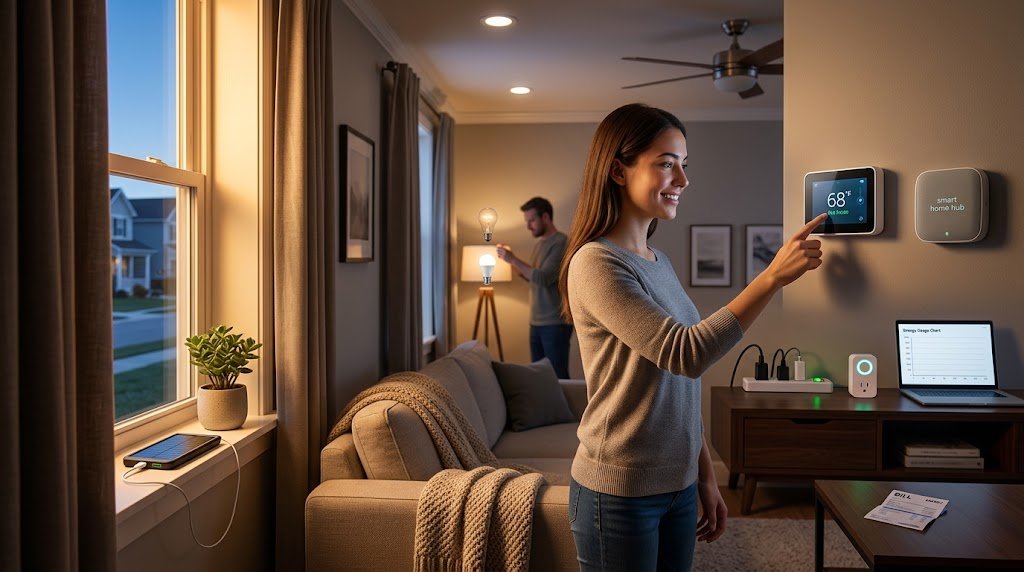
Smart home technology has made it significantly easier for households to monitor and automatically optimize their electricity usage without requiring constant manual attention. Smart thermostats, which learn a household’s temperature preferences and occupancy patterns over time, can automatically adjust heating and cooling settings to optimize energy usage while still maintaining comfort, often producing meaningful savings compared to manually operated thermostats.
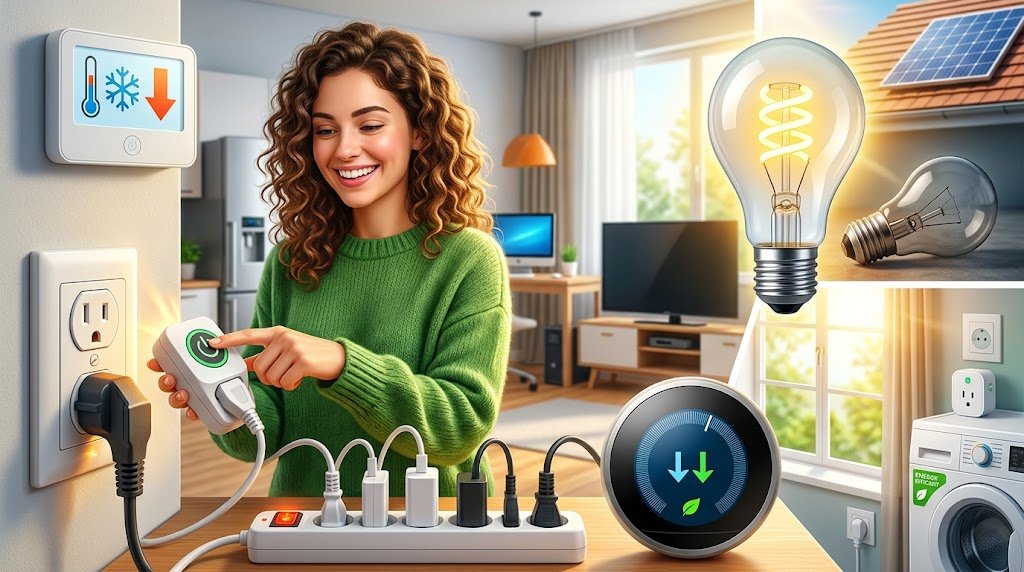
Smart power strips and outlets help eliminate phantom power draw from electronics by automatically cutting power to connected devices when they are not in active use, addressing the standby power consumption issue without requiring households to remember to manually unplug each device individually. Home energy monitoring systems, which track real-time electricity usage across a household, provide valuable visibility into which specific appliances or systems are consuming the most electricity, allowing households to identify and address specific high-consumption culprits more effectively than relying on overall bill totals alone.
Smart lighting systems, which allow for scheduling, remote control, and automatic adjustments based on occupancy or time of day, further reduce the likelihood of lights being left on unnecessarily, particularly in households where family members may not consistently remember to turn off lights manually. While smart home technology often requires an upfront investment, the ongoing electricity savings and improved convenience frequently justify this cost over time, particularly for households with larger energy consumption patterns that offer more room for optimization.
Key Points on Smart Home Technology
- Smart thermostats learn household patterns to automatically optimize energy usage
- Smart power strips eliminate phantom power draw from idle electronics
- Home energy monitoring systems reveal which appliances consume the most electricity
- Smart lighting reduces the likelihood of lights being left on unnecessarily
- Upfront smart home investments often pay off through long-term electricity savings
Insulation and Home Sealing Improvements
Improving a home’s insulation and overall sealing represents one of the more impactful, though sometimes more involved, strategies for reducing electricity consumption associated with heating and cooling systems. Adding or upgrading attic insulation helps prevent significant heat loss during winter months and heat gain during summer months, since attics are often a major source of energy loss in homes with inadequate insulation levels.
Sealing gaps and cracks around windows, doors, electrical outlets, and other potential air leak points throughout the home prevents conditioned air from escaping while also blocking outdoor air infiltration, reducing the overall workload placed on heating and cooling systems. Upgrading to double-paned or energy-efficient windows, while representing a larger financial investment compared to simple sealing measures, can produce substantial long-term energy savings, particularly in homes with older, single-paned windows that allow significant heat transfer.
Weatherstripping around doors and windows provides a relatively low-cost method for reducing drafts and air leaks, offering meaningful energy savings without the higher cost associated with full window replacement or major insulation upgrades. Insulating hot water pipes and water heaters, particularly in homes with electric water heating systems, further reduces electricity consumption by minimizing heat loss during water heating and distribution throughout the home.
Key Points on Insulation and Sealing
- Adequate attic insulation significantly reduces heat loss and heat gain
- Sealing gaps around windows, doors, and outlets reduces heating and cooling workload
- Energy-efficient windows offer substantial long-term savings despite higher upfront cost
- Weatherstripping provides a low-cost method for reducing drafts
- Insulating water heaters and pipes reduces electricity used for water heating
Seasonal Energy Conservation Strategies
Energy conservation needs and opportunities shift significantly across different seasons, and adjusting your approach based on the time of year can help households maximize savings throughout the entire year rather than applying a single static strategy regardless of season. During summer months, focusing on strategies that reduce cooling load, such as closing blinds during the hottest parts of the day to block direct sunlight, using ceiling fans to supplement air conditioning, and avoiding the use of heat-generating appliances like ovens during peak afternoon heat, can meaningfully reduce cooling-related electricity consumption.
Winter months call for a different set of priorities, with sealing drafts, maximizing natural sunlight exposure during daytime hours to passively warm living spaces, and ensuring heating systems are properly maintained becoming particularly important given the increased heating demand during colder periods. Taking advantage of natural sunlight by opening curtains on south-facing windows during winter days, then closing them at night to retain heat, represents a simple, no-cost strategy that can meaningfully reduce reliance on electric heating systems.
Shoulder seasons, such as spring and fall, often present valuable opportunities to rely on natural ventilation rather than mechanical heating or cooling, opening windows during comfortable weather periods rather than defaulting to air conditioning or heating systems that may not be strictly necessary given moderate outdoor temperatures. Adjusting thermostat schedules seasonally, rather than maintaining the exact same settings year-round, ensures households are not inadvertently running heating or cooling systems more than actually needed based on genuine seasonal comfort requirements.
Key Points on Seasonal Energy Conservation
- Summer strategies should focus on reducing cooling load through shading and fans
- Winter strategies benefit from draft sealing and maximizing passive solar heating
- Shoulder seasons offer opportunities to rely on natural ventilation instead of systems
- Seasonal thermostat schedule adjustments prevent unnecessary heating or cooling
- Adapting strategies throughout the year maximizes overall annual energy savings
Renewable Energy Options for Further Reducing Electricity Costs
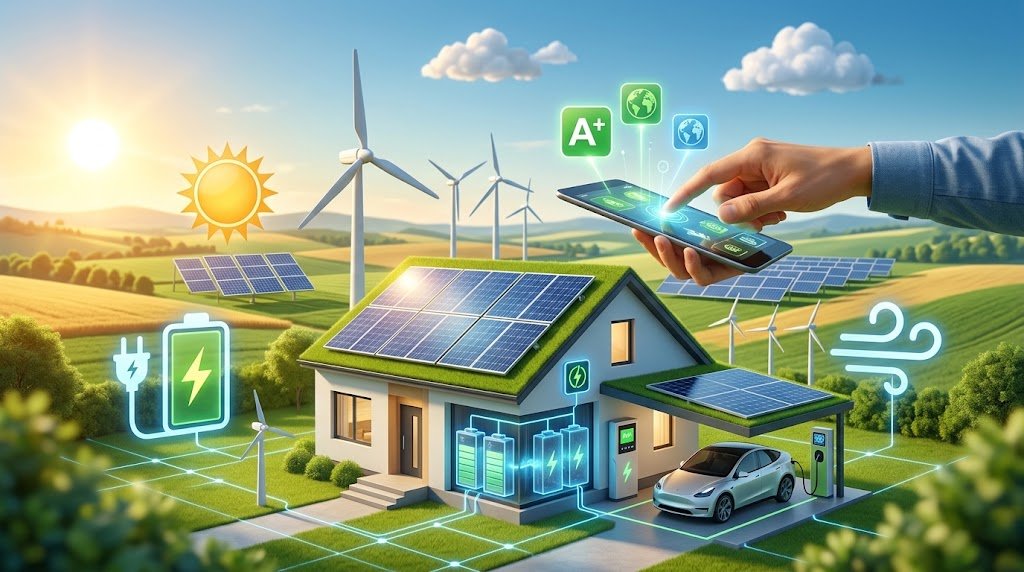
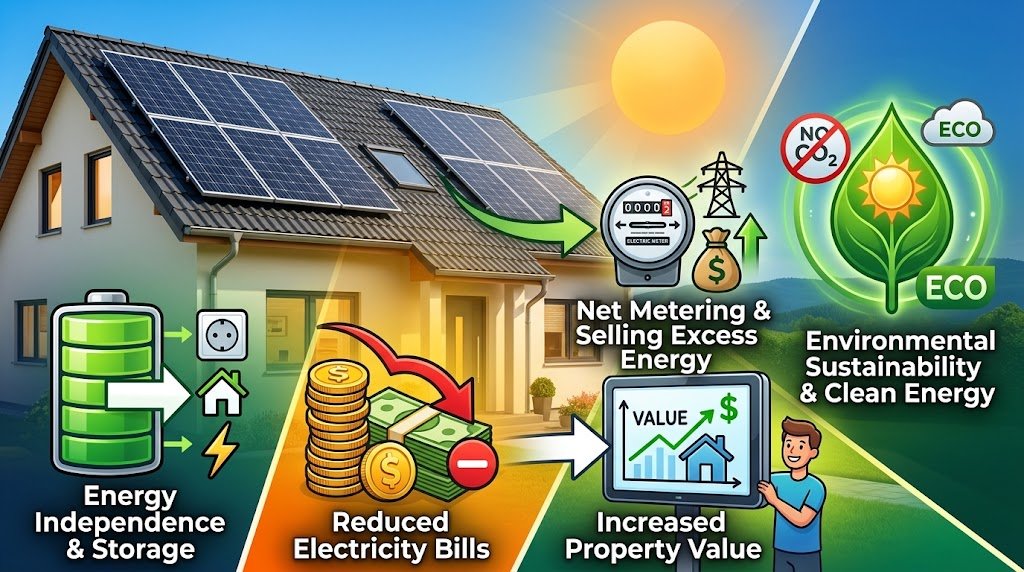
For households looking to go beyond conservation and reduce their reliance on grid electricity altogether, renewable energy options have become increasingly accessible and financially viable in many parts of the country. Residential solar panel installations allow households to generate their own electricity, significantly reducing or in some cases eliminating monthly electricity bills, particularly in regions with strong sun exposure and favorable local incentive programs that help offset the upfront installation costs.
Many utility providers and government programs offer rebates, tax credits, or other financial incentives for households installing solar panels or other renewable energy systems, which can substantially reduce the overall payback period required to recoup the initial investment through ongoing electricity savings. Net metering programs, offered by many utility providers, allow households with solar installations to sell excess electricity generated back to the grid, further improving the financial return on a solar investment by offsetting costs during periods of lower household solar generation.
For households not ready to commit to a full solar installation, community solar programs, which allow individuals to purchase or subscribe to a share of a larger, off-site solar installation, provide an alternative way to access renewable energy benefits without requiring rooftop panel installation or significant upfront investment. Battery storage systems, increasingly paired with residential solar installations, allow households to store excess generated electricity for use during evening hours or power outages, further maximizing the value and reliability of a renewable energy investment.
Key Points on Renewable Energy Options
- Residential solar panels can significantly reduce or eliminate electricity bills
- Rebates and tax credits often substantially reduce solar installation costs
- Net metering allows households to sell excess generated electricity back to the grid
- Community solar programs offer renewable energy access without rooftop installation
- Battery storage systems maximize the value and reliability of solar investments
Common Mistakes That Waste Household Energy
Even households actively trying to conserve energy sometimes fall into common patterns that inadvertently waste electricity and undermine their conservation efforts. Setting thermostats to extreme temperatures in an attempt to heat or cool a home more quickly represents a common misconception, since heating and cooling systems typically operate at the same rate regardless of the target temperature set, meaning extreme settings simply result in the system running longer and consuming more electricity than necessary to reach a more moderate target temperature.
Neglecting regular maintenance on heating and cooling systems, such as skipping annual professional inspections or failing to replace air filters on a regular schedule, often leads to reduced system efficiency and higher electricity consumption over time compared to well-maintained systems. Leaving electronics and appliances in standby mode rather than fully powering them off, particularly for devices like gaming consoles, computers, and entertainment systems that draw significant standby power, represents another frequently overlooked source of unnecessary electricity consumption.
Failing to address obvious air leaks or inadequate insulation, often due to the perceived cost or effort involved in addressing these issues, means households continue paying for wasted heating and cooling energy that escapes through preventable gaps and inadequately insulated areas. Finally, using outdated or inefficient appliances well past their reasonable lifespan, simply because they still technically function, often means missing out on the substantial efficiency improvements found in modern appliance models, resulting in ongoing higher electricity costs compared to the cost of upgrading to more efficient alternatives.
Key Points on Common Energy Waste Mistakes
- Extreme thermostat settings do not heat or cool homes faster, only longer
- Neglected system maintenance leads to reduced efficiency over time
- Standby mode on electronics still consumes meaningful amounts of electricity
- Unaddressed air leaks and poor insulation waste significant heating and cooling energy
- Keeping outdated inefficient appliances often costs more than upgrading
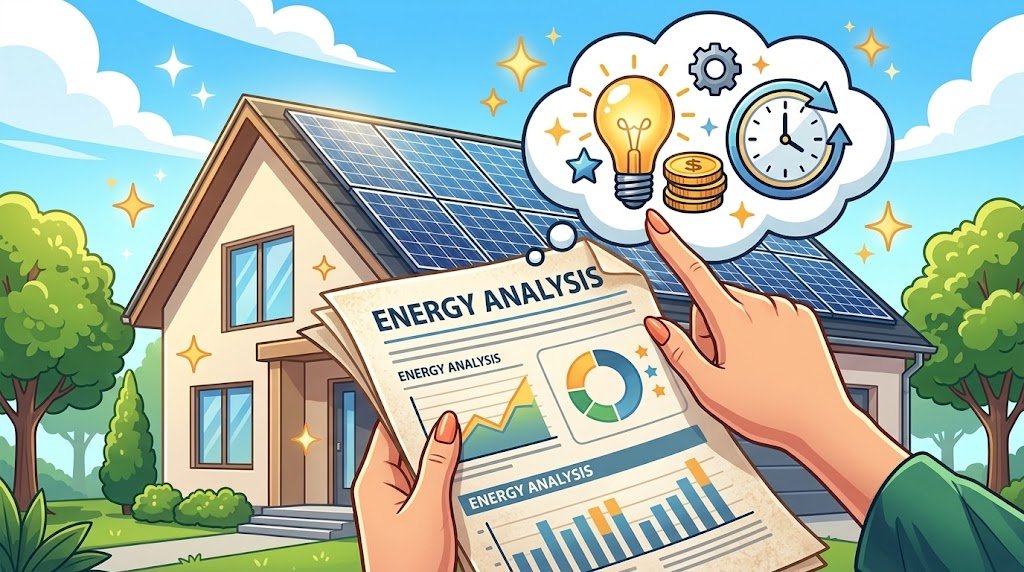
Understanding Your Electricity Bill and Usage Patterns
Developing a clear understanding of how to read and interpret your electricity bill provides valuable insight into your household’s specific usage patterns, helping identify opportunities for targeted conservation efforts. Most electricity bills break down usage by kilowatt-hours consumed, along with the specific rate charged per kilowatt-hour, which can vary based on factors such as time of day, season, or total consumption tier depending on your utility provider’s specific rate structure.
Comparing month-to-month usage patterns, particularly across similar seasons in previous years, helps identify whether recent conservation efforts are producing measurable results or whether unexpected increases in usage might indicate a specific issue, such as a malfunctioning appliance or system that is consuming more electricity than it should. Many utility providers now offer online account access or mobile apps that provide more detailed, often near real-time usage data, allowing households to monitor consumption patterns more closely than what is visible through a traditional monthly paper bill alone.
Understanding whether your utility provider offers time-of-use pricing, where electricity rates vary based on the time of day, allows households to strategically shift certain electricity usage, such as running major appliances, to lower-cost off-peak hours, producing cost savings without necessarily reducing overall total electricity consumption. Reviewing your bill for any unfamiliar fees or rate changes, and contacting your utility provider with questions when something seems unclear, ensures you have an accurate understanding of exactly what you are being charged for and why.
Key Points on Understanding Your Electricity Bill
- Electricity bills break down usage by kilowatt-hours and applicable rates
- Comparing seasonal usage patterns helps identify unexpected consumption increases
- Utility provider apps often offer more detailed, near real-time usage data
- Time-of-use pricing allows strategic shifting of usage to lower-cost hours
- Reviewing your bill regularly helps catch unfamiliar fees or rate changes
Frequently Asked Questions
What household system typically uses the most electricity? Heating and cooling systems generally represent the largest source of household electricity consumption, particularly in regions with extreme seasonal temperatures.
Are LED bulbs really worth the switch from incandescent lighting? Yes, LED bulbs consume significantly less electricity and last considerably longer than incandescent bulbs, making them a cost-effective upgrade despite a higher initial purchase price.
Is it worth investing in a smart thermostat? For most households, yes, since smart thermostats can automatically optimize heating and cooling schedules based on occupancy and preferences, often producing meaningful electricity savings over time.
Does unplugging electronics really make a noticeable difference in electricity bills? While the impact of a single device is small, unplugging multiple electronics that draw standby power throughout a household can add up to a noticeable reduction in overall electricity consumption.
How much can proper insulation actually reduce electricity bills? The exact savings vary based on a home’s current insulation levels and climate, but adequate insulation can significantly reduce heating and cooling costs, which typically represent the largest portion of household electricity usage.
Is solar power a realistic option for reducing electricity bills? For many households, yes, particularly in regions with strong sun exposure and available rebates or tax incentives, though the financial viability depends on factors like roof orientation, local electricity rates, and upfront installation costs.
Do energy conservation habits actually make a measurable difference, or is it mostly marketing? Consistent conservation habits do produce measurable reductions in electricity bills over time, particularly when multiple strategies are combined rather than relying on a single isolated change.
Final Thoughts
Reducing household electricity bills through energy conservation does not require an all-or-nothing approach, since even small, incremental changes to daily habits, lighting choices, and appliance usage can produce meaningful savings over time. Combining these low-cost strategies with more significant investments, such as smart home technology, energy-efficient appliances, or improved insulation, allows households to maximize their overall energy savings based on their specific budget and priorities. By understanding where household electricity is actually being consumed and consistently applying the conservation strategies covered in this guide, most households can achieve noticeable reductions in their monthly electricity bills while maintaining a comfortable and functional home environment.