Currently Empty: $0.00

How to Make Your Home More Energy Efficient
Rising utility costs, growing environmental awareness, and a genuine desire for a more comfortable living space have made home energy efficiency one of the most practical investments a homeowner can make. The good news is that improving your home’s energy performance doesn’t require an all-or-nothing renovation. Meaningful savings can come from a mix of low-cost behavioral changes, moderate upgrades like sealing and insulation, and larger investments in efficient appliances and HVAC systems, each building on the last to reduce both your monthly bills and your home’s overall environmental impact. This guide walks through where to start, which upgrades deliver the best return, and how to prioritize your efforts for the biggest impact on comfort and cost.
Why Energy Efficiency Matters More Than Ever
Home energy use accounts for a significant share of household expenses, and inefficient homes waste a substantial amount of the energy they consume through air leaks, poor insulation, and outdated equipment. Beyond the direct financial cost, an energy-inefficient home tends to be less comfortable, with drafty rooms, inconsistent temperatures, and HVAC systems that work harder than necessary to maintain a livable environment.
Improving energy efficiency isn’t just about cutting costs, though that’s often the primary motivation. A more efficient home is also a more comfortable one, with fewer temperature swings between rooms, reduced humidity problems, and better indoor air quality resulting from proper ventilation and moisture control. Energy-efficient homes also tend to hold their value better and can be genuinely more attractive to buyers, since verified low utility bills and modern, well-maintained systems are increasingly seen as a meaningful selling point rather than a nice-to-have.
Finally, reducing home energy consumption has a real environmental impact. Residential energy use, much of it still generated from fossil fuels in many regions, is a significant contributor to greenhouse gas emissions. Every efficiency improvement that reduces the amount of energy a home consumes also reduces the associated emissions tied to producing that energy, making home efficiency upgrades one of the more accessible ways individual households can meaningfully reduce their environmental footprint.
Start With a Home Energy Audit
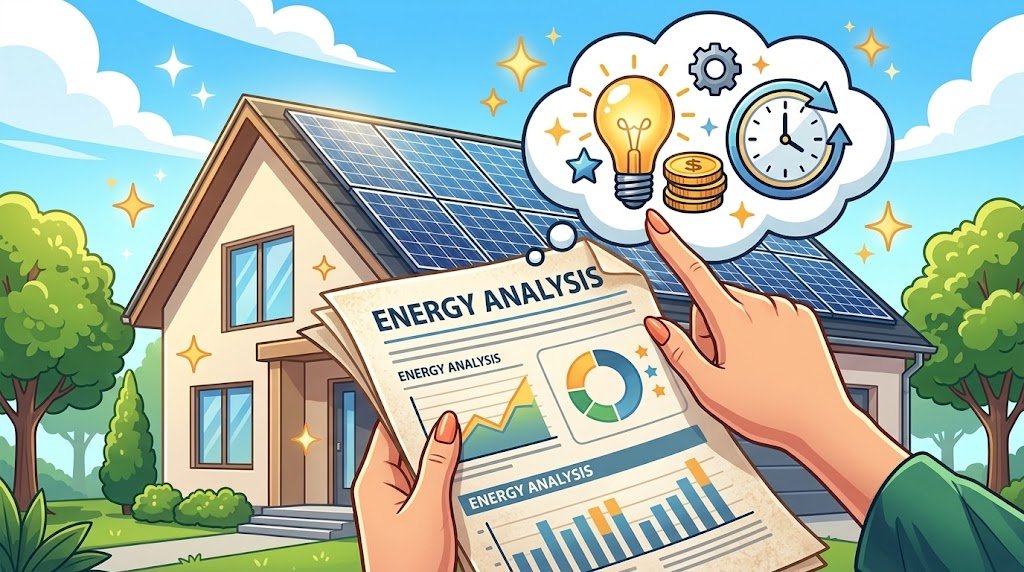
Before investing in any specific upgrade, the most valuable first step is understanding exactly where your home is losing energy. A home energy audit, whether conducted by a certified professional or through a basic self-assessment, identifies the specific weak points in your home’s building envelope and mechanical systems, allowing you to prioritize the upgrades that will deliver the greatest return rather than guessing at what might help.
Professional energy audits typically involve a blower door test, which depressurizes the home to reveal exactly where air is leaking in and out, along with infrared imaging to detect areas of poor insulation or thermal bridging that aren’t visible to the naked eye. A trained auditor will also inspect your HVAC system, water heater, ductwork, and major appliances, and will typically provide a prioritized report outlining which upgrades offer the best combination of cost and energy savings for your specific home.
If a professional audit isn’t in your budget right now, a basic self-assessment can still surface useful information. Walk through your home on a windy or particularly cold or hot day and check for drafts around windows, doors, electrical outlets, and any place where different building materials meet, such as where siding meets a foundation. Check your attic insulation depth against recommended levels for your climate zone, and take note of the age and condition of your major appliances and HVAC equipment, since older units are almost always significantly less efficient than current models. Many utility companies also offer free or heavily discounted home energy assessments as part of broader efficiency programs, which is worth checking before paying for a fully independent audit.
Air Sealing and Insulation: The Foundation of an Efficient Home
Before considering more expensive upgrades like new windows or a new HVAC system, it’s worth addressing air sealing and insulation first, since these improvements are typically among the most cost-effective ways to improve a home’s energy performance. A poorly sealed and under-insulated home will waste energy no matter how efficient your heating and cooling equipment is, since conditioned air simply escapes before it can do its job.
Air Sealing
Air leaks account for a substantial share of energy loss in most homes, occurring around windows, doors, electrical outlets, plumbing penetrations, attic hatches, and the countless small gaps where different building materials and systems meet. Weatherstripping around doors and windows, caulking gaps around trim and penetrations, and sealing larger gaps in the attic and basement with expanding foam or specialized sealant are all relatively low-cost projects that can meaningfully reduce drafts and energy loss. For homeowners who aren’t confident tackling this themselves, many contractors offer air sealing as a standalone service, often paired with a blower door test to verify the improvement afterward.
Insulation
Once air leaks are addressed, insufficient insulation is typically the next major source of energy loss, particularly in attics, where heat naturally rises and escapes if the space above your living area isn’t properly insulated. Insulation requirements vary by climate zone, so it’s worth checking recommended R-values, a measure of insulation’s resistance to heat flow, for your specific region rather than assuming a one-size-fits-all standard. Attic insulation is often the most cost-effective place to start, since it’s typically the most accessible area to work in and tends to have the greatest impact on overall home comfort and energy use. Wall insulation, particularly in older homes built before modern insulation standards, and basement or crawl space insulation are also worth evaluating, though these areas are often more labor-intensive and costly to address than attic insulation.
Upgrading Windows and Doors
Windows and doors are common sources of both air leakage and direct heat transfer, since glass and thin door materials conduct heat far more readily than insulated walls. If your home has older, single-pane windows, upgrading to double or triple-pane, low-emissivity windows can meaningfully reduce both heating and cooling costs, particularly in climates with significant seasonal temperature swings.
That said, window replacement is one of the more expensive efficiency upgrades available, and it’s rarely the first project worth tackling on a limited budget, since air sealing and insulation typically deliver a better return per dollar spent. If your existing windows are in reasonably good condition but still drafty, adding storm windows, applying weatherstripping, or installing window insulation film can capture much of the efficiency benefit at a fraction of the cost of full replacement. For homeowners who do decide to replace windows, look for products certified by ENERGY STAR for your specific climate zone, since window performance requirements vary considerably between hot and cold climates.
Exterior doors deserve similar attention. A poorly sealed or uninsulated exterior door can be a significant source of drafts, and replacing weatherstripping, adding a door sweep, or upgrading to an insulated door can meaningfully improve comfort in entryways, which are often among the draftiest areas of a home.
Heating and Cooling System Efficiency
HVAC systems typically represent the single largest share of a home’s energy use, which makes their efficiency especially important. Whether you’re maintaining an existing system or considering a replacement, several strategies can meaningfully reduce the energy your heating and cooling system consumes.
Routine Maintenance
Before considering equipment replacement, make sure your existing system is running as efficiently as possible. Replacing air filters regularly, typically every one to three months depending on the filter type and your household, scheduling annual professional maintenance, and sealing and insulating ductwork can all improve system efficiency without requiring a full equipment upgrade. Leaky ductwork in particular is a commonly overlooked source of energy loss, since air escaping through duct leaks in unconditioned spaces like attics or crawl spaces never actually reaches your living space.
Smart and Programmable Thermostats
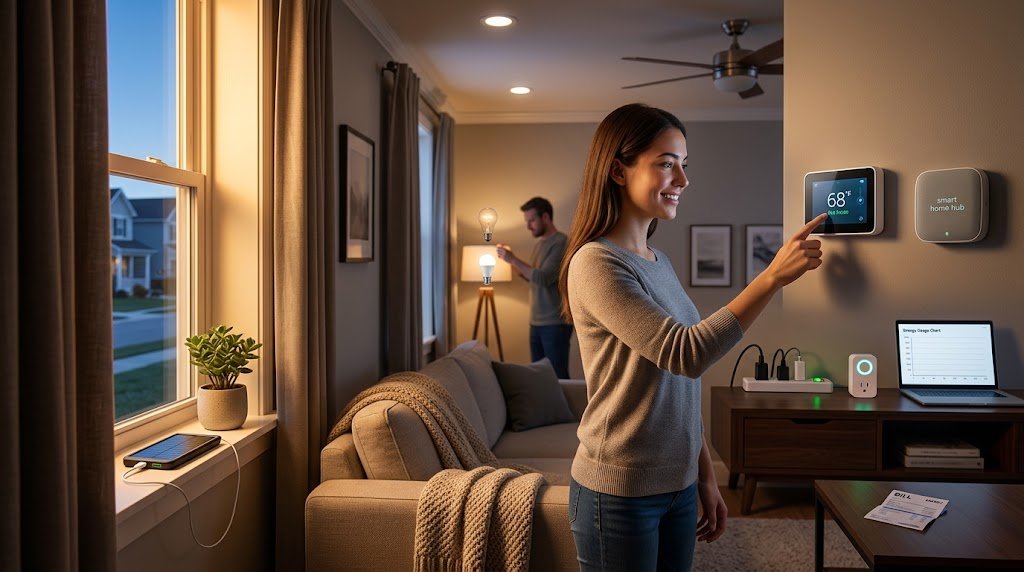
A programmable or smart thermostat allows you to automatically adjust temperatures based on your household’s actual schedule, reducing heating and cooling during hours when no one is home or everyone is asleep, without requiring manual adjustment. Smart thermostats add further refinement through features like learning algorithms that adapt to your patterns over time, geofencing that adjusts settings based on whether household members are nearby, and detailed energy usage reporting that can help identify further savings opportunities. This is one of the most cost-effective upgrades available, often paying for itself within the first year through reduced energy use.
Heat Pumps
Heat pumps have become an increasingly popular alternative to traditional furnaces and air conditioners, since a single system can provide both heating and cooling by moving heat rather than generating it directly, which makes them significantly more energy efficient than combustion-based heating in most climates. Modern heat pumps, including cold-climate models designed to perform well even in colder regions, have made this technology a viable option for a much broader range of homes than in the past. While the upfront cost of a heat pump system is generally higher than a conventional furnace, the ongoing operating cost savings, combined with any available rebates, can make the total cost of ownership competitive or even favorable over the system’s lifespan.
Right-Sizing Replacement Equipment
If you do need to replace your HVAC system, it’s worth having a contractor perform a proper load calculation for your home rather than simply replacing your old system with a similarly sized unit. Oversized systems cycle on and off more frequently, which reduces efficiency and can lead to uneven temperatures and increased humidity problems, particularly in cooling climates. A correctly sized, high-efficiency system, paired with sealed and properly insulated ductwork, will typically deliver better comfort and lower operating costs than simply matching your old system’s capacity.
Water Heating Efficiency
Water heating is another significant contributor to household energy use, and several strategies can reduce its impact. Lowering your water heater’s thermostat to around 120 degrees Fahrenheit, a level still safe for most household uses while reducing standby heat loss, is a simple, no-cost adjustment worth making immediately. Insulating your water heater tank and the first several feet of hot water piping, particularly in unconditioned spaces like a garage or basement, can further reduce heat loss between uses.
For homeowners considering a water heater replacement, heat pump water heaters have become an increasingly popular efficient alternative to conventional electric resistance or gas storage water heaters, since they use the same heat-transfer principle as heat pump HVAC systems to heat water considerably more efficiently than standard electric models. Tankless water heaters, which heat water on demand rather than maintaining a constantly heated storage tank, can also reduce standby energy loss, though their overall efficiency advantage depends significantly on your household’s hot water usage patterns and the specific system installed.
Energy-Efficient Appliances and Lighting
Beyond major systems like HVAC and water heating, everyday appliances and lighting contribute meaningfully to overall household energy use, and upgrading to more efficient options is often one of the more approachable steps in an efficiency plan.
Choosing Efficient Appliances
When replacing major appliances, look for the ENERGY STAR label, which identifies products that meet federal efficiency guidelines without sacrificing performance. Refrigerators, washing machines, dishwashers, and clothes dryers all have significant efficiency differences between models, and choosing certified options can meaningfully reduce both energy and, for water-using appliances like washing machines and dishwashers, water consumption over the appliance’s lifespan. It’s worth factoring the total cost of ownership, purchase price plus expected energy costs over the appliance’s lifespan, into your decision rather than focusing on upfront price alone, since a more efficient model often pays for its higher initial cost through lower ongoing utility bills.
Lighting
Switching from incandescent or older fluorescent bulbs to LED lighting remains one of the simplest, lowest-cost efficiency upgrades available, since LEDs use dramatically less energy than older lighting technology while also lasting considerably longer, reducing both energy costs and the frequency of bulb replacement. Pairing efficient lighting with simple behavioral changes, such as installing motion sensors in infrequently used spaces or simply developing better habits around turning off lights in unoccupied rooms, can further compound the savings.
Phantom Load and Smart Power Strips
Many electronics and appliances continue drawing a small amount of power even when turned off, a phenomenon known as phantom or standby load. While the impact of any single device is small, the cumulative effect across a household’s televisions, chargers, gaming consoles, and other electronics can add up meaningfully over time. Smart power strips, which cut power to connected devices when they’re not actively in use, offer a straightforward way to eliminate this waste without requiring you to remember to unplug individual devices manually.
Simple, Low-Cost Behavioral Changes
Not every efficiency improvement requires spending money on upgrades. A number of simple behavioral adjustments can meaningfully reduce energy use at no cost at all, and they’re worth adopting regardless of what larger upgrades you eventually pursue.
Adjusting your thermostat by even a few degrees, warmer in summer and cooler in winter, can produce noticeable savings over the course of a year, particularly when combined with a programmable thermostat that automates the adjustment. Using ceiling fans to improve air circulation can allow you to raise your air conditioning setpoint slightly while maintaining the same level of comfort, since moving air feels cooler even at the same temperature. Making use of natural light and passive solar heating, opening curtains on sunny winter days to let warmth in, and closing them during hot summer afternoons to block heat gain, costs nothing and can measurably reduce reliance on artificial heating and cooling.
Running full loads in dishwashers and washing machines rather than partial loads, washing clothes in cold water when appropriate, and air-drying laundry when practical are all small habits that add up over time. Even something as simple as regularly cleaning HVAC filters, refrigerator coils, and dryer vents can meaningfully improve appliance efficiency, since dust and debris buildup forces equipment to work harder than necessary to achieve the same result.
Understanding Current Rebates and Incentives
The landscape of financial incentives for home energy efficiency upgrades has shifted significantly, and it’s important to have accurate, current information before budgeting a project around expected tax savings. The Energy Efficient Home Improvement Credit, known as Section 25C, and the Residential Clean Energy Credit, known as Section 25D, were both significantly expanded under the Inflation Reduction Act, offering substantial federal tax credits for improvements like insulation, windows, doors, heat pumps, and solar installations. However, both credits were terminated earlier than originally scheduled under the One, Big, Beautiful Bill Act, a federal budget law signed in July 2025. As a result, neither Section 25C nor Section 25D is available for equipment placed in service on or after January 1, 2026. If you completed a qualifying project before that date, you may still be able to claim the credit on your 2025 tax return, but new projects starting in 2026 are no longer eligible for these particular federal credits.
This doesn’t mean all financial support for energy efficiency upgrades has disappeared. State-administered rebate programs funded through the Inflation Reduction Act’s Home Energy Rebates initiative, commonly referred to as the HOMES and HEAR (or HEEHRA) programs, remain active in many states and were not eliminated by the same legislation that ended the federal tax credits. These programs typically provide point-of-sale rebates rather than a tax credit claimed later, with eligibility and rebate amounts often varying based on household income and the specific efficiency improvements made. Because availability and funding levels vary considerably by state, it’s worth checking your state energy office’s website directly for current program status before starting a project.
Beyond state programs, many local electric and gas utilities continue to offer their own rebates and incentives for efficiency upgrades, including instant rebates on smart thermostats, high-efficiency HVAC equipment, and weatherization projects. These utility-level incentives are generally unaffected by federal tax law changes and are well worth checking before beginning any significant project, since it’s often possible to stack a utility rebate with a state program even without a federal tax credit involved. Given how much this landscape has shifted recently, it’s a good idea to verify current program details directly with your state energy office and local utility rather than relying on older articles or contractor marketing material that may reference credits that are no longer available.
Prioritizing Your Efficiency Upgrades
With so many possible upgrades available, it helps to have a general framework for deciding where to start, particularly if budget constraints mean you can’t tackle everything at once. As a general rule, the most cost-effective path follows a rough hierarchy: start with no-cost behavioral changes and basic maintenance, move on to air sealing and insulation, then address HVAC system efficiency and thermostat upgrades, and finally consider larger investments like window replacement, appliance upgrades, or renewable energy systems like solar panels.
This sequencing matters because upgrades further down the list often perform better, and sometimes even become smaller in scope, once the more foundational issues are addressed. Installing a new high-efficiency HVAC system in a home that’s still leaking air through unsealed gaps and under-insulated walls means that system is working harder than it needs to, undermining some of the efficiency gain you paid for. Addressing the building envelope first, then upgrading mechanical systems, generally produces better overall results than tackling upgrades in reverse order.
That said, real-world budgets and circumstances don’t always allow for a perfectly sequenced approach. If your water heater or HVAC system fails unexpectedly, replacing it with an efficient model makes sense regardless of where it falls in an idealized priority list. Use the general framework as a guide for planned, discretionary upgrades, while still making sensible efficiency choices when equipment failures force your hand on timing.
Considering Renewable Energy: Solar Panels and Battery Storage
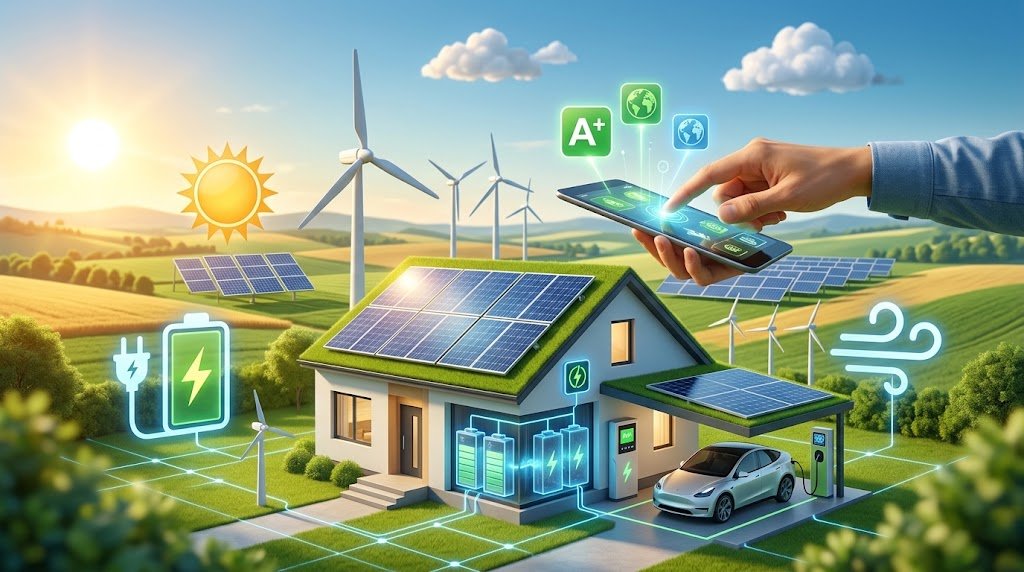
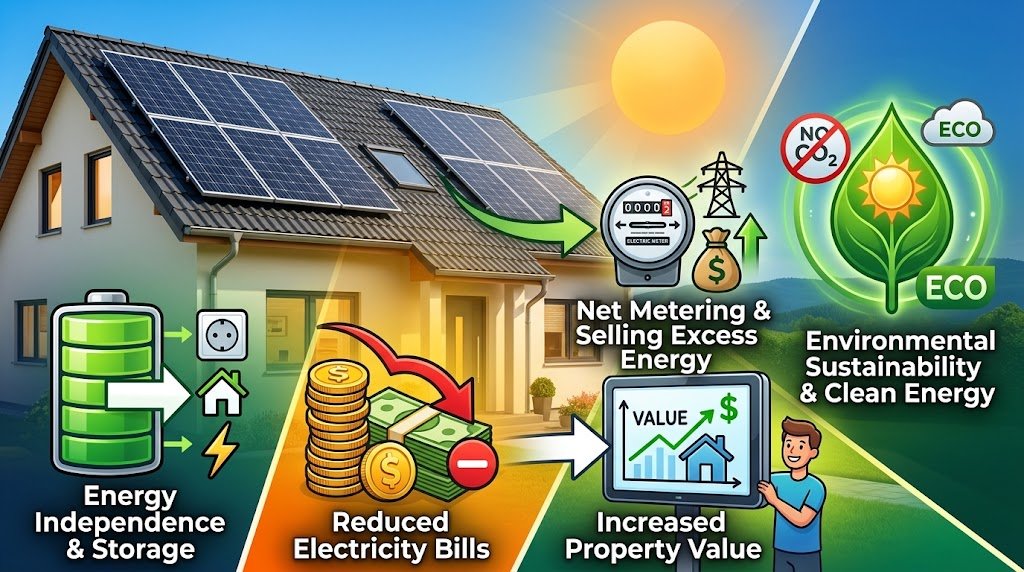
For homeowners who have already addressed the fundamentals of air sealing, insulation, and efficient mechanical systems, renewable energy generation, most commonly rooftop solar panels, represents the next tier of investment for reducing a home’s net energy costs and environmental footprint. Solar panels don’t reduce your home’s energy consumption directly, but by generating your own electricity, they can substantially offset or even eliminate your reliance on grid power, depending on your system size, local sunlight conditions, and household usage patterns.
Before committing to a solar installation, it’s worth having a professional assess your roof’s condition, orientation, and shading, since these factors significantly affect a system’s output and, therefore, its financial payback period. A roof that will need replacement within the next several years is generally better addressed before solar panels are installed, since removing and reinstalling panels to accommodate a later roof replacement adds unnecessary cost. It’s also worth getting quotes from multiple installers and comparing not just the upfront cost, but the specific equipment being proposed, panel efficiency ratings, inverter type, and warranty terms all meaningfully affect a system’s long-term value.
Battery storage systems, which store excess solar generation for use during evening hours or power outages, have become an increasingly common pairing with rooftop solar, particularly in regions with time-of-use electricity pricing or unreliable grid service. While batteries add meaningfully to the upfront cost of a solar installation, they can improve a system’s overall value proposition in areas where utilities pay relatively little for excess power sent back to the grid, since stored energy used later in the day can offset costs that would otherwise be charged at a higher rate.
As with other major efficiency investments, it’s worth checking your state energy office and local utility for current rebate and incentive programs before committing to a solar installation, since availability and program details vary considerably by location and continue to shift as federal, state, and utility-level incentive programs evolve.
Financing Options for Larger Efficiency Projects
For homeowners considering more substantial upgrades, HVAC replacement, whole-home insulation, or solar installation, financing options beyond simply paying out of pocket are worth exploring, particularly given the current gap left by the expiration of federal tax credits. Many utilities offer on-bill financing programs, which allow homeowners to pay for approved efficiency upgrades through their regular utility bill over time, often at favorable interest rates compared to general consumer financing.
Energy-efficient mortgages, available through certain government-backed loan programs, allow homebuyers or homeowners refinancing their mortgage to roll the cost of qualifying energy improvements into their home loan, spreading the cost over the mortgage term rather than requiring a large upfront payment. Property Assessed Clean Energy, commonly known as PACE financing, is another option available in some states and municipalities, allowing homeowners to finance efficiency upgrades through a special assessment on their property tax bill, though the specific terms, interest rates, and availability vary considerably by location and are worth researching carefully given some documented concerns about consumer protections in certain PACE programs.
Whatever financing route you consider, it’s worth running the numbers carefully, comparing the total cost of financing against your expected energy savings, to confirm that a given upgrade genuinely pays for itself within a reasonable timeframe rather than assuming that any efficiency improvement is automatically a good financial decision regardless of financing terms.
Frequently Asked Questions
How much can I realistically save by making my home more energy efficient? Savings vary considerably based on your home’s current condition, climate, and which upgrades you pursue, but homeowners addressing significant air leaks, upgrading insulation, and improving HVAC efficiency often see meaningful reductions in their utility bills. A professional energy audit can give you a more specific estimate tailored to your particular home rather than relying on generic percentage figures that may not reflect your situation.
Should I prioritize insulation or a new HVAC system if I can only afford one right now? In most cases, air sealing and insulation should come first, since a well-sealed and insulated home allows any HVAC system, old or new, to perform more efficiently. Installing a new high-efficiency system in a poorly insulated home means that system still has to work harder than necessary, which reduces the overall benefit of the upgrade.
Are DIY energy efficiency upgrades worth doing, or should I always hire a professional? Many efficiency upgrades, such as basic weatherstripping, caulking, LED bulb replacement, and installing a smart thermostat, are well within reach for most homeowners comfortable with basic home improvement tasks. More complex projects, such as attic insulation installation, ductwork sealing, or any work involving electrical or gas systems, are generally safer and more effective when handled by a qualified professional, both for safety reasons and because improperly installed insulation or sealing can sometimes create moisture or ventilation problems if not done correctly.
Is it worth getting a professional energy audit if I already have a general sense of my home’s problem areas? A professional audit still tends to be valuable even if you have some intuition about your home’s weak points, since tools like blower door tests and infrared imaging can reveal specific, quantifiable problem areas that aren’t visible or obvious through a casual walkthrough, helping you prioritize spending more precisely rather than relying on guesswork.
Do energy efficiency upgrades actually increase my home’s resale value? Verified energy efficiency improvements, particularly newer HVAC systems, updated insulation, and efficient windows, are increasingly viewed favorably by buyers who are conscious of ongoing utility costs. While the exact value impact varies by market and the specific improvements made, documented efficiency upgrades and lower historical utility bills can be a genuine selling point worth highlighting when it comes time to sell.
Final Thoughts
Making your home more energy efficient doesn’t require choosing between a handful of expensive renovations, it’s better understood as a layered process that starts with understanding where your home is losing energy, addresses the foundational issues of air sealing and insulation, and then builds toward smarter systems, more efficient appliances, and better daily habits. Even homeowners on a tight budget can make meaningful progress through low-cost behavioral changes and basic maintenance, while those ready to invest in larger upgrades will find that heat pumps, high-efficiency water heating, and modern insulation standards can deliver genuine long-term savings on top of improved comfort.
While the federal tax credit landscape has changed significantly, with Section 25C and Section 25D no longer available for 2026 projects, state rebate programs and local utility incentives remain worth pursuing, and the underlying value of an efficient home, lower bills, better comfort, and reduced environmental impact, hasn’t gone anywhere. Whether you start with a professional energy audit or simply begin sealing drafts around your windows this weekend, every step toward a more efficient home is one that pays dividends in comfort and savings for years to come.