Currently Empty: $0.00

What Are the Best Daily Health Guide Apps for Personalized Wellness Plans?
The wellness app market has changed dramatically over the past several years. What used to be a simple step counter or calorie log has evolved into a genuinely sophisticated layer of AI-driven coaching that adapts to your sleep patterns, energy levels, nutrition habits, and stress levels in real time. Rather than delivering the same generic advice to every user, today’s best personalized wellness apps build a daily plan around your actual data, drawn from wearables, manual logging, and behavioral patterns tracked over weeks and months. This guide walks through what genuinely personalized wellness apps look like, how to evaluate them, and which platforms currently stand out across nutrition, fitness, sleep, and mental health.
What Makes a Wellness App Genuinely “Personalized”
Before comparing specific apps, it’s worth understanding what separates a truly personalized wellness experience from an app that simply lets you input your age and weight once and then delivers the same generic content to every user. Genuine personalization depends on an app’s ability to continuously learn from your behavior and biometric data, then adjust its recommendations accordingly rather than relying on static, one-time inputs.
The strongest personalized wellness apps typically draw on several data sources simultaneously: wearable device data such as heart rate variability, sleep stages, and activity levels; manually logged information like food intake, mood, or energy levels; and behavioral patterns the app observes over time, such as which content you engage with, when you’re most likely to complete a workout, or how your mood tends to shift throughout the week. The most sophisticated apps synthesize all of this into a single daily recommendation or plan, rather than presenting you with a wall of disconnected charts and expecting you to draw your own conclusions.
It’s also worth distinguishing between apps that offer AI-assisted personalization and apps that simply use the word “personalized” as marketing language without meaningfully adapting their output. A genuinely personalized app should visibly change its recommendations as your data changes, if you’ve been under-sleeping for a week, a well-designed app should proactively adjust its workout intensity suggestions or nudge you toward earlier bedtimes, rather than repeating the same static advice regardless of your recent patterns.
Choosing a Wellness App Based on Your Primary Goal
Because “wellness” spans such a wide range of health domains, from nutrition and fitness to sleep and mental health, there’s no single app that does everything equally well. The most effective approach is usually to identify your primary goal first, then choose an app, or combination of apps, built specifically around that priority, rather than searching for one universal solution.
If Your Priority Is Nutrition and Weight Management
Noom remains one of the most recognized names in behavior-based weight management, distinguishing itself through a psychology-first approach rather than pure calorie counting. The app combines food logging with daily lessons grounded in cognitive behavioral techniques and personalized coaching, aiming to help users understand and modify the underlying habits and thought patterns driving their eating behavior rather than simply tracking numbers. Its color-coded food categorization system is designed to simplify nutrition decisions without requiring users to memorize detailed macro targets, and its coaching component adds a layer of accountability that pure tracking apps typically lack. Noom tends to work best for users who want structured behavioral support and are willing to engage with daily educational content, rather than those looking for a lightweight, purely numbers-based tracking experience.
MyFitnessPal takes a more data-forward approach, built around one of the most extensive food databases available, supported heavily by user-submitted entries, along with barcode scanning for quick logging. Its AI-powered nutrition insights now go beyond basic calorie and macro tracking, aiming to help users understand broader dietary patterns over time. MyFitnessPal tends to appeal most to users who want precise, detailed tracking without a heavy coaching or behavioral education layer, making it a strong complement to a separate fitness or mental health app rather than a full standalone wellness solution on its own.
For users managing specific metabolic conditions, Lark offers a more clinically oriented program structure, with specific tracks addressing weight loss, prediabetes, type 2 diabetes, high blood pressure, and support for people using GLP-1 medications. Because these conditions often require more structured, condition-specific guidance than general wellness advice can safely provide, Lark’s approach leans more heavily on established clinical protocols and, in many cases, integration with a user’s broader care plan, making it a reasonable option for users who qualify for one of its specific programs rather than those seeking general, unstructured wellness support.
If Your Priority Is Fitness and Training
For users specifically focused on structured fitness coaching, several apps have emerged that go beyond simple workout logging to build genuinely adaptive training plans. Apps built around continuous biometric feedback, drawing on connected wearables like Apple Watch, Oura, WHOOP, Garmin, or Fitbit, can adjust workout intensity recommendations based on your current recovery status rather than following a fixed weekly schedule regardless of how your body is actually responding to recent training load. This kind of adaptive programming represents one of the more meaningful advances in personalized fitness coaching, since traditional static training plans don’t account for the reality that recovery and readiness fluctuate day to day based on sleep, stress, and cumulative training stress.
Apple Fitness+ remains a strong option specifically for iPhone and Apple Watch users who prefer polished, instructor-led workout classes over pure AI-generated programming, offering a library of studio-style classes across strength, cardio, yoga, and mindfulness, with metrics pulled directly from your Apple Watch displayed during each session. For users who want a more autonomous coaching relationship without a human trainer, several AI-driven personal training apps have emerged that provide real-time voice coaching and rep-by-rep feedback during workouts, aiming to replicate some of the moment-to-moment guidance and accountability that has traditionally required a human trainer to deliver.
For users who prefer a hybrid model that blends AI-driven programming with genuine human coaching input, several platforms now offer combined digital and human coaching services, providing the structure and accountability of a real coach relationship alongside the convenience and adaptive tracking of a digital app. This hybrid approach tends to work particularly well for users who have struggled with sticking to purely app-based programs on their own and want an added layer of human accountability without committing to the cost of exclusively in-person personal training.
If Your Priority Is Sleep
Sleep Cycle has built a strong reputation specifically around sleep tracking and analysis, offering meaningful longitudinal data about your sleep patterns without requiring any additional wearable hardware, since it relies on your phone’s microphone and motion sensors to analyze sleep cycles and wake you during a lighter sleep phase within a set alarm window. For users who don’t already own a dedicated sleep-tracking wearable, this makes Sleep Cycle a particularly accessible entry point into more detailed sleep insight, though users who already track sleep through a smartwatch or ring may find the data somewhat redundant with what their existing device already provides.
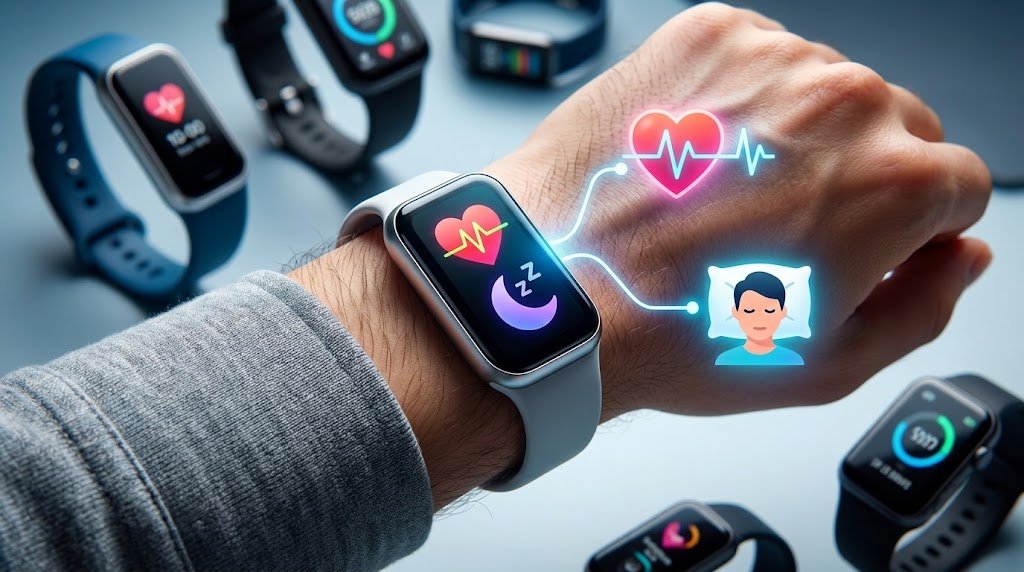
For users who own a dedicated sleep-focused wearable like an Oura Ring or WHOOP device, the companion apps for those devices typically offer considerably more granular sleep stage data, drawn from actual physiological signals like heart rate variability and body temperature, rather than the motion and sound-based estimation that phone-only apps like Sleep Cycle rely on. If sleep is your primary wellness concern and you’re willing to invest in a dedicated wearable, a ring or wrist-based device paired with its companion app will generally provide more accurate, detailed insight than a phone-only solution.
If Your Priority Is Mental Health and Stress Management
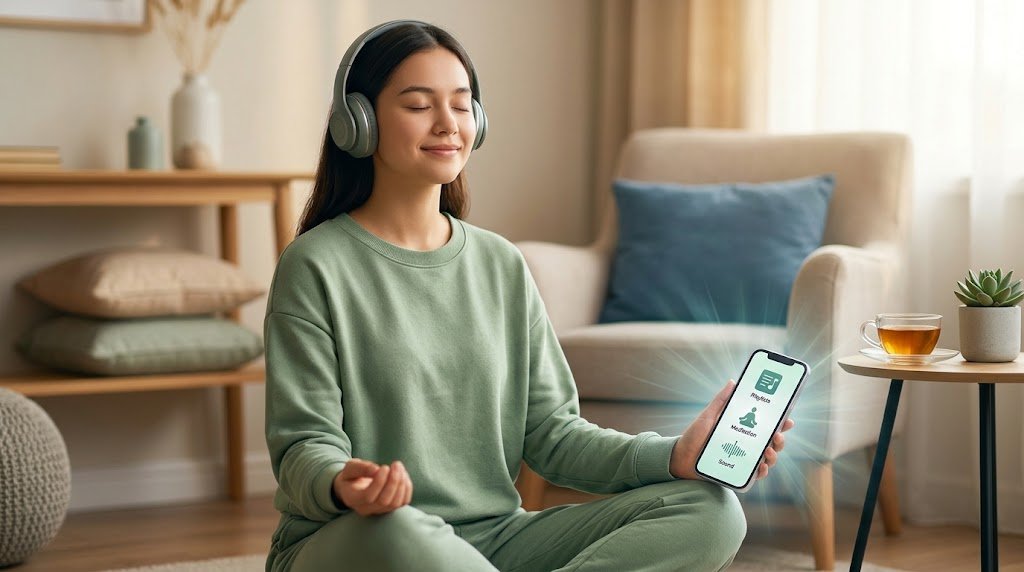
Headspace and Calm remain the two most recognized names in app-based meditation and stress management, and both have meaningfully expanded their personalization capabilities in recent years. Headspace’s AI-assisted features track which content you engage with, how often you complete sessions, and how you rate your sleep and mood afterward, gradually shifting its recommendations to reflect your actual usage patterns rather than simply surfacing generically popular content. Calm has taken a similar approach, with features that analyze usage patterns, mood tracking inputs, and even the time of day you tend to open the app to proactively surface relevant content, for example, offering wind-down sessions if the app has noticed a pattern of evening stress.
Beyond guided meditation, a newer category of AI-powered journaling apps has emerged, using AI to guide users through structured writing or speaking prompts intended to reduce stress and build emotional self-awareness, then translating those entries into personalized mood insights over time. These apps tend to work well as a complement to, rather than a replacement for, structured meditation content, since they focus more on active reflection and emotional processing than on guided relaxation techniques.
It’s worth being clear-eyed about the limitations of app-based mental health tools regardless of how sophisticated their AI features become. These apps are designed to support general emotional wellbeing and stress management, not to diagnose or treat mental health conditions, and anyone experiencing significant or persistent mental health symptoms should seek support from a licensed mental health professional rather than relying on an app as a substitute for clinical care.
Comprehensive, All-in-One Wellness Platforms
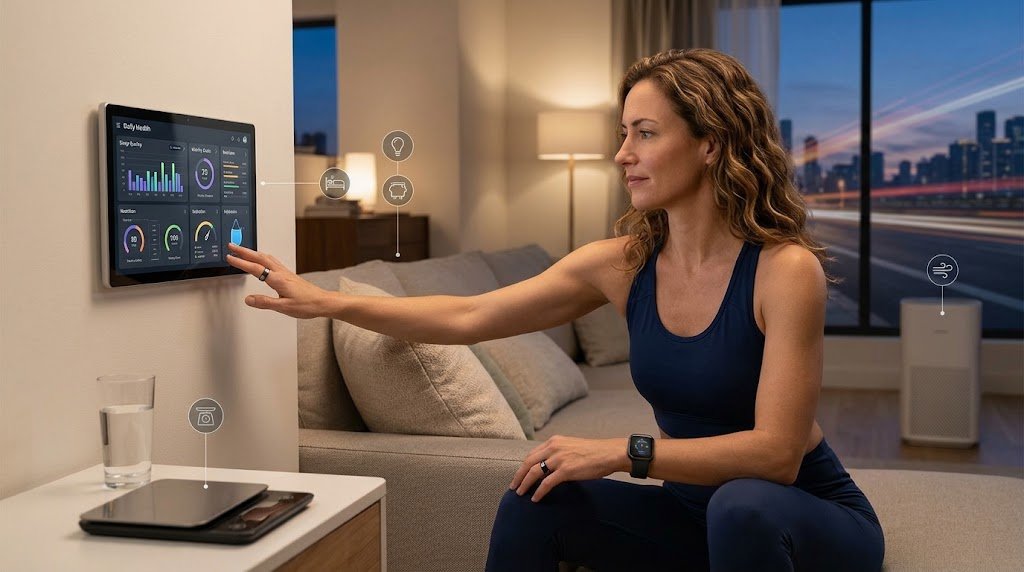
Beyond category-specific apps, a growing number of platforms aim to unify nutrition, fitness, sleep, recovery, and daily scheduling into a single coaching layer, connecting to wearables you already own rather than requiring you to purchase new hardware. These all-in-one platforms typically work by pulling data from multiple connected devices and apps, then synthesizing that combined picture into a single daily recommendation or plan, aiming to solve the fragmentation problem that comes from juggling several separate, disconnected wellness apps.
The appeal of this approach is fairly intuitive: rather than checking a nutrition app, a fitness app, and a sleep app separately and trying to mentally combine their insights yourself, an all-in-one coaching layer does that synthesis for you, ideally surfacing a more holistic and genuinely useful daily plan than any single-purpose app could offer in isolation. The tradeoff is that these platforms are inherently dependent on the quality and breadth of their integrations, an all-in-one coach is only as good as the wearables and apps it can actually connect to, and users with a less common device combination may find their experience more limited than someone using a widely supported ecosystem like Apple Watch, Fitbit, or Oura.
Some platforms in this category, particularly those developed by major technology companies with existing hardware ecosystems, have started incorporating large language model-powered coaching directly into their existing fitness and health apps, aiming to deliver more conversational, context-aware guidance than the more rule-based recommendation engines that powered earlier generations of wellness apps. This trend toward LLM-integrated coaching is still relatively new, and the quality and reliability of the guidance these features provide varies considerably between platforms, so it’s worth treating any single AI-generated recommendation as a starting point for your own judgment rather than as unquestionable clinical advice, regardless of how confidently it’s presented.
Building a Wellness App Stack Instead of Relying on One App
Given how specialized many of the strongest apps in each category tend to be, a genuinely comprehensive personalized wellness approach often works better as a deliberately chosen combination of two or three apps rather than a single all-purpose solution. A reasonable stack might pair a scheduling or energy-management app that helps structure your day around your natural energy patterns, a dedicated sleep-tracking tool, and either a behavior-focused nutrition coaching app or a straightforward, precise food-logging app, depending on whether you want structured psychological support or simply want detailed tracking data.
The key to making a multi-app stack work well is choosing apps that offer reasonably strong integration or data-sharing support between them, so that your sleep, nutrition, and activity data can inform each other rather than existing in entirely separate silos. Many of the apps discussed in this guide support integration with Apple Health, Google Health Connect, or similar platform-level health data hubs, which can serve as a central point of data aggregation even across apps from different developers that don’t directly integrate with each other.
It’s worth resisting the temptation to install every wellness app that looks appealing, since juggling too many overlapping tools tends to produce diminishing returns, more time spent logging and checking apps, without a corresponding increase in genuinely useful insight. A focused stack of two or three well-chosen apps, each covering a distinct wellness domain without significant overlap, will generally produce a more sustainable and genuinely useful daily routine than a sprawling collection of apps competing for your attention.
Data Privacy Considerations for Health Apps
Because personalized wellness apps depend on collecting genuinely sensitive data, biometric readings, sleep patterns, mood logs, and sometimes even reproductive health or medication information, data privacy deserves real consideration before committing to any platform. While reputable consumer wellness apps are generally required to follow relevant privacy regulations and maintain clear consent processes for data collection, the specific protections, and the resulting legal accountability, can vary considerably depending on how a given company classifies its service and where you’re located.
Before granting extensive data access to a new wellness app, it’s worth reviewing how that app describes its data storage, sharing, and monetization practices in its privacy policy, particularly whether health data is ever shared with third parties for advertising purposes, a practice that some free wellness apps have historically engaged in more than users realized. Apps that emphasize on-device or local data processing, rather than routing all of your biometric data through external servers, generally offer a stronger privacy posture, though this approach can sometimes come at the cost of certain cloud-based features like cross-device syncing or more advanced AI processing that requires greater computational resources than a phone can typically provide on its own.
It’s also worth being particularly cautious with apps that request access to reproductive health tracking, mental health journaling, or other especially sensitive categories of personal data, checking specifically whether that data is used only for generating your personal insights or whether it’s also used more broadly for aggregated research, advertising, or other secondary purposes you may not have fully considered when granting initial access.
How to Evaluate Whether an App’s AI Coaching Is Actually Good
As AI-driven coaching features have proliferated across the wellness app landscape, it’s worth developing a basic framework for evaluating whether a given app’s AI recommendations are genuinely useful or just superficially personalized marketing language layered over generic advice. A few practical tests can help you judge this for yourself during a trial period rather than relying solely on an app’s own marketing claims.
Pay attention to whether recommendations actually change meaningfully in response to real shifts in your data. If you deliberately have a poor night of sleep or a particularly high-stress day, does the app’s next recommendation visibly reflect that change, or does it continue offering the same generic suggestion regardless of what you just logged? Genuinely adaptive apps should show a clear, traceable connection between specific data inputs and the resulting change in guidance.
It’s also worth noticing whether an app’s recommendations come with any explanation of the reasoning behind them, or whether they’re presented as unexplained directives you’re simply expected to follow. Apps that briefly explain why a particular recommendation was made, for example, noting that a suggested lighter workout is based on below-average recovery scores overnight, tend to build more genuine trust and understanding than apps that simply issue instructions without context, and this transparency also makes it easier for you to exercise your own judgment about whether to follow a given recommendation on any particular day.
Finally, be appropriately skeptical of any health app, regardless of how sophisticated its AI branding, that positions itself as a replacement for professional medical guidance rather than a complement to it. The most trustworthy personalized wellness apps are explicit about their limitations, clearly stating that they’re not a substitute for a doctor, therapist, or registered dietitian, and encouraging users to seek professional care for specific medical concerns, symptoms, or diagnosed conditions rather than positioning AI-generated guidance as a comprehensive alternative to clinical care.
Frequently Asked Questions
Do personalized wellness apps require a wearable device to work well? Not necessarily. Several strong options, including Sleep Cycle for sleep tracking and Noom or MyFitnessPal for nutrition, work entirely from manual input and your phone’s built-in sensors without requiring a separate wearable purchase. That said, apps focused on recovery, strain, or detailed sleep staging generally become significantly more accurate and useful when paired with a compatible wearable device, since they can draw on direct physiological data rather than relying on self-reported or phone-based estimates alone.
Are free versions of these apps worth using, or do I need a paid subscription for real personalization? This varies considerably by app. Some platforms offer genuinely useful personalization within their free tier, while others gate most of their adaptive coaching features behind a paid subscription, with only basic tracking available for free. It’s generally worth testing an app’s free tier or trial period first to get a feel for its core experience before committing to an annual subscription, particularly since several apps in this space offer meaningful functionality without requiring immediate payment.
Can these apps replace working with a registered dietitian, personal trainer, or therapist? Generally not for anyone with specific medical conditions, complex goals, or significant symptoms requiring professional judgment. Personalized wellness apps are best understood as valuable daily support tools that can complement professional care, providing structure, tracking, and accountability between appointments, rather than as a full substitute for individualized professional guidance, particularly for anyone managing a diagnosed health condition.
How much personal data should I expect to share for an app to work well? The degree of personalization generally scales with the depth of data you’re willing to share, an app with access to your sleep, activity, and nutrition data can offer more genuinely tailored guidance than one working from limited manual inputs alone. It’s worth weighing this tradeoff deliberately for each app individually rather than granting broad data access by default, particularly for apps handling especially sensitive categories of health information.
Is it better to use one all-in-one wellness app or several specialized apps? Both approaches can work well, and the right choice depends on how deeply you want to engage with any single wellness domain. An all-in-one platform offers convenience and a unified daily plan but may not match the depth of a category-specific app in any one area, while a deliberately chosen stack of two or three specialized apps can offer more depth in each domain at the cost of slightly more setup and app-switching in your daily routine.
What to Look for Before Downloading a New Wellness App
With so many options available, it helps to have a consistent evaluation checklist before committing time and data to a new wellness app, rather than simply downloading whatever ranks highest in an app store search or appears most frequently in social media advertising.
Credibility of the Underlying Guidance
Look into whether an app’s recommendations are grounded in established behavioral science, nutrition guidelines, or exercise physiology research, or whether they’re generated purely through opaque AI processes without any clear connection to established health science. Apps developed with input from registered dietitians, licensed therapists, certified trainers, or physicians tend to carry more credibility than those built purely as software products without any clinical or scientific advisory involvement. Many established apps publish information about their clinical advisory boards or the credentials behind their content, which is worth checking during your evaluation.
Integration With Devices You Already Own
Before committing to an app, confirm it actually supports the specific wearable or health platform you use, whether that’s Apple Health, Google Health Connect, Fitbit, Garmin, Oura, or WHOOP. An app that claims broad personalization but doesn’t integrate with your existing devices will likely fall back on less accurate, manually entered data, undermining much of the value that genuine personalization is supposed to provide. It’s also worth checking whether an app requires you to manually re-enter data it should be able to pull automatically from a connected device, since excessive manual logging is one of the most common reasons people abandon wellness apps within the first few weeks.
Realistic Trial Period Before Subscribing
Nearly every major wellness app in this space offers either a free tier or a trial period before requiring payment, and it’s worth using that window deliberately to test how the app’s recommendations evolve over at least one to two weeks of real use, rather than judging an app based solely on its first-day onboarding experience. Personalization by definition takes time to develop as an app gathers more data about your patterns, so a fair evaluation requires giving it enough time to actually demonstrate that adaptive behavior rather than dismissing it prematurely based on generic first-day content.
Long-Term Cost Versus Value
Subscription costs across this app category vary enormously, from apps that remain genuinely useful on a free tier to premium coaching platforms charging a significant monthly or annual fee. Before committing to a longer subscription term, it’s worth calculating the total annual cost and honestly assessing whether the specific features you’re paying for, deeper AI coaching, expanded content libraries, or advanced integrations, actually align with what you’ll realistically use consistently, rather than subscribing based on an initial burst of motivation that may not sustain itself for a full year.
Common Reasons Wellness Apps Get Abandoned
Understanding why people commonly stop using wellness apps can help you choose one more likely to fit into your actual life rather than becoming another unused download. One of the most frequent reasons is excessive manual logging burden, apps that require detailed, effortful data entry every single day tend to see engagement drop off sharply within the first month, particularly once the initial motivation of a new app or a new year’s resolution fades. Apps that minimize manual entry through device integration, barcode scanning, or simple voice or photo-based logging tend to sustain engagement considerably better over time.
Another common abandonment trigger is generic, repetitive content that doesn’t actually feel personalized despite marketing claims to the contrary. If a user notices that an app’s daily recommendations remain essentially unchanged regardless of their actual behavior or data, trust in the app’s value tends to erode quickly, reinforcing the importance of choosing apps that demonstrate visible, responsive personalization rather than relying on the word alone. Notification fatigue is a related issue, with apps that send excessive or poorly timed push notifications often getting muted, ignored, or deleted entirely, even when the underlying content and coaching quality is genuinely strong.
Finally, a mismatch between an app’s core approach and a user’s actual preferences and personality often leads to abandonment even when the app itself is well-designed. Someone who finds detailed data and metrics motivating may quickly disengage from an app built around gentle, encouragement-focused coaching, while someone who finds precise numerical tracking stressful may find a heavily data-driven app counterproductive to their actual wellbeing. Being honest with yourself about which coaching style genuinely motivates you, rather than which one seems most impressive or scientifically rigorous on paper, tends to produce much better long-term adherence.
Final Thoughts
The best daily health guide app for personalized wellness planning ultimately depends on which area of wellness matters most to you right now, nutrition, fitness, sleep, or mental health, and how much you’re willing to invest in wearable hardware, subscription costs, and ongoing data sharing to get more tailored guidance. Apps like Noom and MyFitnessPal lead the nutrition category with genuinely different philosophies worth choosing between based on whether you want behavioral coaching or precise tracking. Headspace and Calm remain the strongest choices for stress and mindfulness, both now meaningfully more adaptive than their earlier, more static versions. Sleep Cycle offers accessible sleep insight without hardware, while wearable-paired apps from Oura and WHOOP deliver deeper physiological detail for users willing to invest in a dedicated device. All-in-one coaching platforms are an increasingly compelling option for users who want a single, synthesized daily plan rather than juggling several separate tools.
Whichever apps you choose, remember that even the most sophisticated AI-driven personalization is a support tool, not a replacement for professional medical, nutritional, or mental health care. Used thoughtfully, alongside appropriate professional guidance where needed, today’s personalized wellness apps offer a genuinely powerful way to turn scattered daily data into a clearer, more actionable picture of your overall health, one that adapts with you rather than treating every day the same.